


Author: admin
How to Plan the Ultimate Great Migration Experience
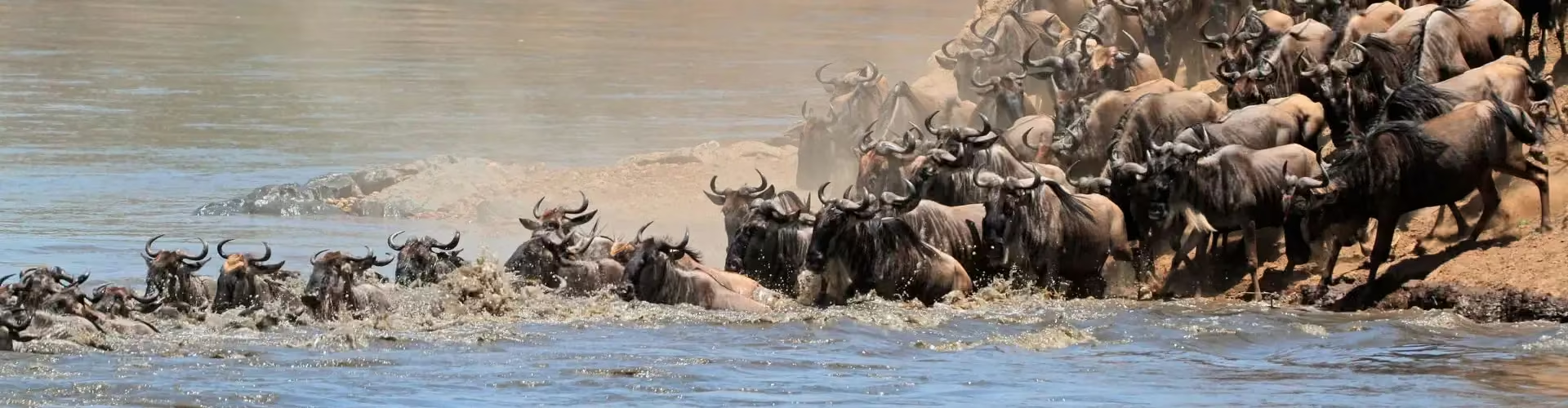
Few wildlife experiences are as dramatic as watching the Great Migration reach the Mara River.
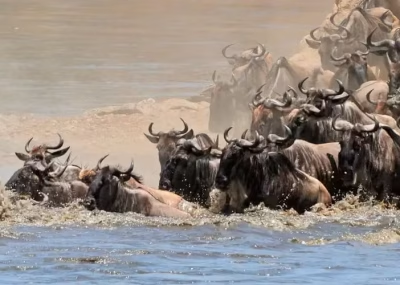
Every year, thousands of wildebeest, together with zebras and other wildlife, move north through the Serengeti in search of fresh grazing. Eventually, the herds reach the Mara River, where they face one of the most challenging stages of their journey.
For many travellers, the dream is to sit quietly near the river, watch the herds gather on the banks, and wait for that extraordinary moment when one animal finally takes the plunge, and thousands follow.
But a Mara River safari is about more than simply arriving in northern Serengeti. The timing of your visit, where you stay, how long you remain in the area, your guide, and the way you travel in and out all influence the experience.
At Calabash Adventures, we create these safaris around the movement of the migration rather than offering a fixed itinerary. Accommodation can also be adjusted to suit individual preferences, whether you prefer a luxury lodge, an intimate tented camp, or a comfortable mid-range property.
When Is the Best Time to See the Mara River Migration?
The Mara River crossing season is generally associated with July through October, but nature does not work to a calendar.
The exact timing varies from year to year, depending on rainfall, grazing conditions, water levels and the movement of the herds. There is therefore no particular date when a crossing can be promised.
A river crossing is not a scheduled event. Wildebeest may gather along the riverbank for hours or even days. They may approach the water and turn back, or cross at one location while another group chooses a different point.
This uncertainty is an important part of the experience. Rather than expecting the river to operate on a timetable, travellers should understand that the longer they give themselves in the area, the more opportunities they have to witness the migration unfolding naturally.
The Magic Is Often in the Waiting
One of the most memorable parts of a Mara River safari can be the anticipation before the crossing.
You may find hundreds or thousands of wildebeest gathered along the riverbank. The herd becomes restless. Some animals move towards the water while others hesitate or retreat. Zebras wait among them, and crocodiles may be visible below.
Then suddenly, one animal makes the decision.
The herd follows.
Within moments, the quiet riverbank can become a remarkable scene of movement, dust and noise as animals make their way through the water.
There is no way to manufacture this moment. You can be present, prepared and patient, but ultimately the decision belongs to the animals.
Choosing the Right Accommodation
For a Mara River-focused safari, accommodation should be considered alongside the wildlife experience, not separately from it.
We generally recommend accommodation in or around the Kogatende and northern Serengeti area when the Mara River is the main objective.
During the migration season, information can change quickly. Your guide may receive news that a large herd is gathering near a crossing point or that animals have begun moving towards the river.
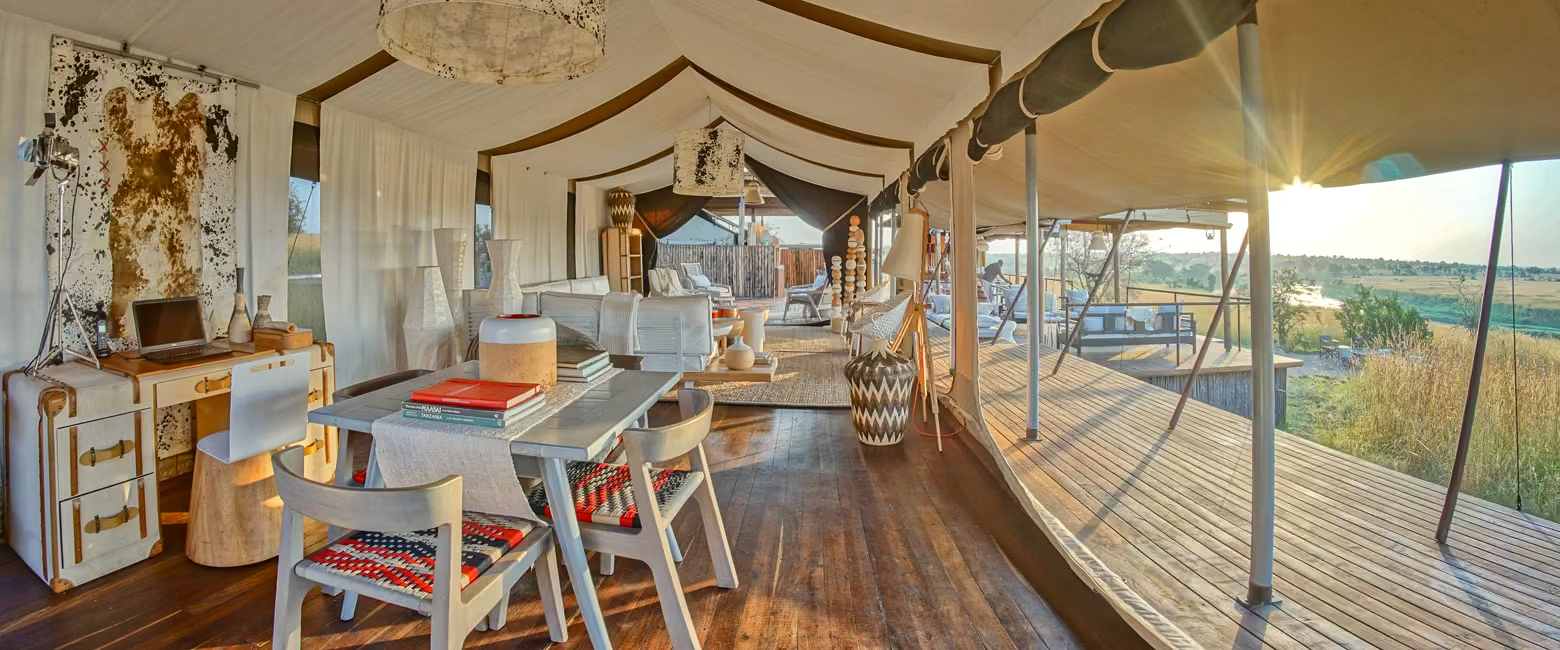
When that happens, being within a practical distance allows the guide to assess the opportunity and, when appropriate, head towards it.
You cannot make the wildebeest cross, but you can give yourself a better opportunity to be there when they do.
Accommodation choices vary from comfortable seasonal tented camps to more luxurious lodges and permanent or semi-permanent camps. At Calabash Adventures, we can adjust or change accommodation where availability allows, depending on your preferred comfort level, budget and safari style.
For travellers on a short safari, we pay particular attention to making the accommodation work with the limited time available.
How Long Should You Stay?
If the Mara River is the main purpose of your safari, we recommend two to six nights in northern Serengeti when your schedule allows.
This gives you time to search for the migration, wait for potential crossings and explore the wider northern Serengeti rather than making the entire trip dependent on one moment.
It also reduces the pressure of thinking that a particular morning or afternoon must produce a crossing.
A longer stay can form part of a wider Tanzania safari:
Arusha → Tarangire → Ngorongoro → Central Serengeti → Northern Serengeti → Kogatende → Fly out
This allows you to experience the wider ecosystem before concentrating on the migration in the north.
Can You Do a Short Mara River Safari?
Absolutely.
Not everyone has a week available for a safari. Some travellers may already be in Zanzibar, Kenya or elsewhere in Tanzania and simply want to experience the migration around the Mara River.
For these travellers, a short safari can make perfect sense when it is designed carefully.
Rather than spending several days travelling by road from Arusha, Calabash Adventures can arrange a safari around flying directly to Kogatende.
Example: Three-Day Mara River Safari
Day 1: Fly to Kogatende and enjoy an afternoon game drive.
Day 2: Full-day northern Serengeti safari focused on the migration and Mara River area.
Day 3: Morning game drive followed by a flight to your next destination.
This gives travellers the chance to spend their limited time in northern Serengeti rather than using much of the safari for long road transfers.
Fly In, Experience the Mara River and Fly Out
For travellers with limited time, we generally recommend flying into Kogatende and flying out after the safari.
You can fly into Kogatende from Arusha, another Serengeti airstrip or another suitable connection, depending on the flight schedule.
Once you arrive, your safari can begin almost immediately. After your Mara River experience, flying out can save another full day of road travel, particularly if you are continuing to Zanzibar.
For example:
Zanzibar → Kogatende → Mara River Safari → Zanzibar
or:
Arusha → Kogatende → Mara River Safari → Zanzibar
For travellers with more time, driving back can be a wonderful alternative. The journey itself becomes part of the safari, with opportunities for additional wildlife viewing and the chance to experience the changing landscapes of the Serengeti at a slower pace.
Fly out when time is your priority; drive back when you have the time and want to make the journey part of the adventure.
What Can Calabash Adventures Do for You?
At Calabash Adventures, we believe a short safari should be focused rather than rushed.
Depending on your needs, we can arrange:
- Private safari vehicle and experienced guide.
- Flights to and from Kogatende.
- Accommodation matched to your budget and preferences.
- Full-day and flexible game drives.
- Migration-focused route planning.
- Park and conservation fees.
- Meals and transfers.
- Airstrip and airport transfers.
- Balloon safari where appropriate.
- Combination itineraries with Zanzibar or other Tanzanian destinations.
- Accommodation changes where availability permits.
Most importantly, our guides remain attentive to what is happening on the ground.
A good safari guide does more than drive from one location to another. They watch animal behaviour, listen to information from other guides, consider road conditions and recent sightings, and use their experience to decide how best to use the day.
This becomes particularly valuable during the migration, when conditions can change quickly.
The Importance of Patience and Responsible Safari
We would never promise a guaranteed Mara River crossing.
Even during the height of the migration, wildebeest may choose another crossing point, turn back or cross when you are somewhere else.
That unpredictability is part of the experience—and respecting it is part of responsible safari.
TANAPA has guidelines governing vehicle positioning and behaviour around river crossings, designed to reduce disturbance to wildlife.
At Calabash Adventures, our aim is not to make the animals cross for us. It is to give you the best possible opportunity to witness the event while respecting the animals, the environment and the rules of the park.
Sometimes, the most memorable part of the day is not the crossing itself. It may be watching thousands of animals gather, listening to the sounds of the herd and wondering whether they will finally make their move.
What Should You Bring?
A little preparation will make your Mara River safari more comfortable.
We recommend bringing:
- Binoculars.
- A camera with a good zoom lens.
- Extra batteries or a power bank.
- Comfortable, neutral-coloured clothing.
- A warm layer for early mornings.
- Hat and sunglasses.
- Sunscreen.
- Insect repellent.
- Comfortable closed shoes.
- Light rain protection.
- A reusable water bottle.
A dustproof camera bag or protective cover is also useful. Northern Serengeti roads can be dusty, while weather conditions can change quickly.
Mara River Safari Options with Calabash Adventures
There is no single way to experience the Mara River.
For travellers with four to six nights, a longer northern Serengeti stay offers more time, flexibility and opportunities to experience the migration without feeling rushed.
For travellers with three to four nights, a fly-in safari to Kogatende followed by a carefully planned northern Serengeti stay can provide an excellent balance between time and experience.
For travellers with only two nights, a fly-in/fly-out Kogatende safari can offer a focused opportunity to experience the migration while minimizing travel time.
And for those who have more time, we can incorporate the Mara River into a broader Tanzania safari covering Tarangire, Ngorongoro and the central Serengeti before continuing north.
At Calabash Adventures, we understand that the Mara River is not simply another destination to tick off a list. It is a natural event, and its unpredictability is part of its beauty.
Our role is to combine good timing, sensible logistics, suitable accommodation, experienced guiding and flexibility so that when the migration presents an opportunity, you are ready to experience it.
The crossing itself may last only minutes.
The memories, however, can last a lifetime.
Prepared by Hamadi Tillya, a Tanzania safari specialist with more than 25 years of experience designing exceptional, tailor-made safari experiences.
Related Articles
Halal Safari in Tanzania: Tanzania stands as one of the most naturally Muslim-friendly safari destinations in Africa, offering Muslim travelers the rare opportunity to experience world-class wildlife while maintaining their faith and cultural values. Approximately 35% of the population is Muslim, especially along the coast and in Zanzibar. Moreover, the country’s hospitality industry now reflects a deep understanding and infrastructure for Islamic practices. Furthermore, Muslim guests seeking the adventure of a lifetime will find a Halal safari with Calabash Adventures balanced.
Additionally, we ensure that every Muslim guest can explore Tanzania’s landscapes—from Serengeti plains to Ngorongoro Crater—with peace of mind. Additionally, a fulfilling safari isn’t just about the Big Five; it’s about comfort, respect, and honoring faith and dietary needs.
Calabash Adventures offers a safari that is fully halal.
In addition, a genuine Halal safari experience goes far beyond simply offering halal meals. In addition, it encompasses every aspect of the journey, from prayer accommodations to privacy considerations. Moreover, Calabash Adventures has built frameworks to let Muslim travelers explore the wilderness without compromising obligations.
Additionally, Halal Meals at Every Stop.
Indeed, one of the primary concerns for Muslim travelers is dietary compliance. Furthermore, we offer halal safaris with carefully selected halal-certified meals prepared to the highest standards. We confirm halal meal arrangements with every lodge and tented camp before your trip—in writing, not left to chance. Moreover, most camps on Tanzania’s Northern Circuit are familiar with halal dietary needs, so we outline halal meat preparation, use separate utensils when required, and keep meals at the same quality and variety as other guests. Even for picnic lunches within national parks, we ensure all food is strictly halal and prepared according to Islamic guidelines.
Furthermore, these dietary preferences are communicated clearly to all accommodations. As a result, you do not need to ask at each camp; it is already taken care of.
Prayer Time Flexibility
Prayer times are seamlessly integrated into the safari schedule, not treated as interruptions. Our private safari vehicles and dedicated guides ensure your schedule bends to accommodate prayer—there is no group to wait for, no itinerary that cannot flex.
We perform Fajr before the morning game drive departs. Dhuhr and Asr prayers can be performed during the midday rest or at a quiet, safe location in the park when Salah time arrives during game drives. Maghrib coincides closely with the return from the evening game drive, and Isha falls after dinner at camp. We plan every day around these natural rhythms, ensuring there is no tension between a full safari schedule and the five daily prayers.
Our guides, who are themselves practicing Muslims, understand the landscape well and will find appropriate spots for prayer in the wilderness. We also provide prayer mats, Qibla direction information, and carry extra water for wudu if needed.
Modest Accommodation and Privacy
Our team selects accommodations prioritizing privacy and comfort, providing serene retreats after a day of adventure. Many lodges provide prayer mats, Qibla directions, and spaces for worship, allowing you to maintain your spiritual routine throughout your journey. Some lodges have quiet corners with prayer mats and clear Qibla directions, while for accommodations without such facilities, a mobile Qibla app or travel-sized compass ensures you always know the direction to pray.
Our private safari vehicles give you complete control over your pace, comfort, and privacy—essential for families with young children and for travelers who value modesty in their journey. You will never share a vehicle between groups, ensuring your family travels alone with your dedicated guide.
Muslim-Friendly Destinations in Tanzania
Zanzibar deserves special mention as the most Muslim-friendly destination in the country. With over 95% Muslim population, halal food is the default, mosques are on every corner, and the culture is deeply Islamic. The call to prayer weaves through Stone Town’s alleyways five times a day, and for Muslim families, Zanzibar feels culturally familiar, spiritually comfortable, and genuinely welcoming.
Arusha, the safari capital, has mosques throughout the town. Dar es Salaam, the largest city, has a significant Muslim population with halal restaurants abundant and mosques easy to find.
The Northern Circuit Experience
Additionally, Tanzania’s Northern Circuit offers iconic safari experiences, and travelers can tailor each destination on this route for Halal travel.
Tarangire National Park.
Known for its massive elephant herds and ancient baobab trees, Tarangire offers a stunning introduction to Tanzania’s wildlife. A full-day game drive here includes a halal picnic lunch served in a scenic park area with prayer breaks available. The park is ideal for those seeking shorter safaris while maintaining their faith-based travel requirements.
Serengeti National Park.
The legendary Serengeti, with its endless golden plains and unrivaled wildlife encounters, is the crown jewel of any Tanzanian safari. Depending on the season, you may witness the awe-inspiring Great Wildebeest Migration—a natural spectacle like no other. Our halal safaris ensure full days of game viewing with prayer times integrated naturally into the schedule. Halal meals are provided throughout the day, and facilities for Islamic prayers are available at your accommodation.
Ngorongoro Crater.
This UNESCO World Heritage Site, often called the Eighth Wonder of the World, is a magnificent natural amphitheater teeming with wildlife. Descend into this ancient volcanic caldera for close encounters with the Big Five, including the rare black rhino. Halal picnic lunches are served within the crater, with designated quiet spots for Dhuhr and Asr prayer
Lake Manyara National Park.
Additionally, Lake Manyara offers an excellent introduction to Tanzania’s ecosystems, known for tree-climbing lions, pink flamingos, and diverse birdlife. Halal meals and prayer breaks are integrated into the day’s activities.
Our Muslim Driver-Guide.
At Calabash Adventures, we understand the importance of traveling with a guide who shares and respects your faith. Our driver-guides are practicing Muslims who pray all five daily prayers. They understand the rhythm of Islamic daily life and ensure your safari schedule accommodates prayer times seamlessly. They know the landscape, understand where to find quiet, safe spots for prayer, and can provide guidance on Qibla direction while in the wilderness.
For female travelers or families who prefer, female guides are available in many destinations, though availability varies, so early booking is recommended
Sample Halal Safari Itineraries by Calabash Adventures
We offer a range of itineraries tailored to different timeframes and budgets, all available as private, halal-certified experiences.
4-Day Halal Tanzania Lodge Safari
This compact journey covers Lake Manyara, Serengeti, and Ngorongoro Crater. Prices start from $1,490 per person (based on 4+ people) and include all halal meals, Muslim-friendly accommodations, private 4WD safari vehicle, culturally respectful guide, and scheduled prayer breaks.
Explore Tarangire, Serengeti, and Ngorongoro in a comprehensive 5-day experience with halal-certified meals, designated prayer times, and Muslim-friendly accommodations throughout.
For those seeking to witness the Great Migration, this extended safari focuses on the Serengeti and Ngorongoro with halal meals and prayer facilities available throughout.
Most halal safari guests choose to extend their trip to Zanzibar, where halal food is the default, and the cultural atmosphere is naturally welcoming to Muslim travelers.
Practical Tips for Muslim Travelers
What to Pack: Bring a portable prayer mat, a travel Qibla compass or app, and a small towel for wudu. Loose, lightweight long sleeves and trousers are recommended for modesty and sun protection. Otherwise, let us know, and we will provide it for you
When to Travel: The dry season (June–October) offers the best wildlife viewing and more comfortable weather for families.
Wudu Facilities: While most public restrooms at park gates and picnic sites are basic, our guides carry extra water to assist with wudu when needed. When water is not available, tayammum (dry ablution) is a valid alternative in Islam.
Why Choose Calabash Adventures for Your Halal Safari
- 100% Halal-Certified Meals – Every meal, from bush picnics to lodge dining, is prepared according to Islamic dietary laws.
- Muslim Driver-Guides – Our guides are practicing Muslims who pray all five prayers and understand your spiritual needs.
- Prayer-Friendly Scheduling – We build your itinerary around prayer times, not the other way around.
- Private Safaris – You travel exclusively with your family or group, ensuring complete privacy and modesty.
- No Hidden Costs – All halal arrangements come at no extra charge.
- Tailored Experiences – From 4-day adventures to extended Zanzibar escapes, we customize every journey to your preferences.
- Proven Expertise – Calabash Adventures has years of experience hosting Muslim travelers from around the world.
Book Your Halal Safari Today.
A Halal safari with Calabash Adventures represents the perfect union of adventure and faith. From halal-certified meals and prayer-friendly accommodations to Muslim driver-guides who understand your needs, every detail is arranged with your faith and comfort in mind. You can explore Tanzania’s wild landscapes, iconic wildlife, and vibrant cultures—all in line with Islamic values.
For any safari you choose from our list, we will make it Halal for you without extra cost.
Travel with peace of mind. Discover the wonders of Tanzania through the lens of your faith.
Contact Calabash Adventures Today
Let us craft your perfect Halal safari experience. Your spiritual adventure in the heart of Africa awaits!
Calabash Adventures – Where Faith Meets Adventure.
Related Articles
Nyerere National Park to Zanzibar Safari | Tanzania Bush & Beach Ultimate Guide
A Nyerere National Park to Zanzibar Safari is one of the best ways to experience the incredible diversity of Tanzania. It combines the untamed wilderness of southern Tanzania with the idyllic beaches of Zanzibar, creating a journey that perfectly balances adventure and relaxation.
Imagine starting your day on a game drive as the African bush comes to life. You might watch elephants gathering along the Rufiji River, spot a pride of lions resting beneath acacia trees, or enjoy the peaceful rhythm of a boat safari while hippos and crocodiles share the waterways. Just a short flight later, you’ll find yourself walking barefoot on Zanzibar’s white sandy beaches, listening to the gentle sound of the Indian Ocean, and enjoying a slower pace of life.
This contrast is what makes Tanzania so unique. Few destinations allow you to experience world-class wildlife and a tropical island escape within the same holiday, and the connections between Nyerere National Park and Zanzibar make the transition surprisingly easy.
Whether you’re planning a honeymoon, a family holiday, or your first African safari, this bush and beach combination offers something for every type of traveler. In this guide, we’ll cover everything you need to know—from the best wildlife experiences and travel options to safari costs, suggested itineraries, and practical tips to help you plan an unforgettable journey from Nyerere National Park to Zanzibar.
What Makes Nyerere National Park One of Africa’s Greatest Wilderness Areas?
Nyerere National Park is the largest national park in Tanzania and one of the largest protected ecosystems in Africa, covering more than 30,000 square kilometers. Formerly known as Selous Game Reserve, it was renamed to honor Tanzania’s founding president, Julius Nyerere.
Unlike the more famous northern parks, Nyerere remains relatively undiscovered by mass tourism, making it one of the most exclusive safari destinations in East Africa.
Scale and ecological importance
The park forms part of a larger ecosystem that supports one of the most important wildlife populations in Africa. Its vast size allows animals to roam freely without the pressure of overcrowding or heavy tourist traffic.
Key ecological facts include:
- Over 1 million large mammals are within the ecosystem
- One of the strongest populations of African wild dogs in Africa
- More than 440 bird species recorded
- Extensive populations of elephants, buffalo, lions, and hippos
- A diverse mix of wetlands, rivers, woodlands, and savannahs
Because of this diversity, every safari day feels different. One moment you are driving through dry woodlands, the next you are watching hippos fight in a river channel.
Why does Nyerere feel different from the northern Tanzania parks
While Serengeti and Ngorongoro attract millions of visitors annually, Nyerere remains quiet and uncrowded. This creates three major advantages:
- Fewer safari vehicles at sightings
- More authentic wilderness experience
- Greater sense of exclusivity and privacy
This is one of the reasons high-end travelers increasingly choose southern Tanzania for premium safari experiences.
Safari Activities in Nyerere National Park
One of the greatest strengths of a Nyerere National Park safari is the remarkable diversity of experiences available. Unlike many safari destinations that rely mainly on game drives, Nyerere offers a full spectrum of land, water, and walking activities that create a richer and more dynamic safari journey.
Game Drives: The Classic Safari Experience
Game drives remain the foundation of any safari in Nyerere, offering wide-ranging exploration across one of Africa’s largest protected ecosystems. Because the park is so vast and varied, each drive feels different, with shifting landscapes and constantly changing wildlife encounters.
Expect to see a classic mix of African wildlife, including:
- Lions resting under acacia trees during the heat of the day
- Elephant herds move steadily across open plains
- Giraffes feed gracefully from tall acacia canopies
- Large buffalo herds gather near seasonal water sources
Early mornings and late afternoons are the most productive times for game viewing. During these hours, temperatures are cooler, predators are more active, and light conditions are ideal for photography. The sense of space in Nyerere means sightings often feel private and uninterrupted, enhancing the feeling of true wilderness.
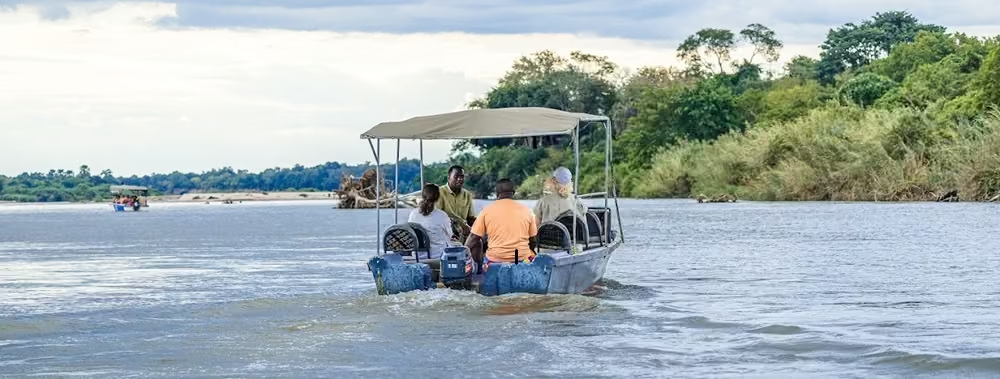
Boat Safaris on the Rufiji River
The Rufiji River is the lifeblood of the ecosystem and one of the most unique safari environments in East Africa. A boat safari here transforms the traditional safari perspective entirely, replacing dusty tracks with calm waterways and reflective horizons.
From the water, wildlife interactions become even more dramatic and intimate. Key highlights include:
- Massive pods of hippos surfacing and grunting around boats
- Nile crocodiles basking along sandy riverbanks
- Elephants wading into the water to drink and bathe
- Fish eagles soaring overhead, scanning for prey
Sunset boat safaris are especially unforgettable. As the sun lowers over the river, the water turns golden, creating some of the most atmospheric safari moments in Tanzania. This experience is often considered a signature highlight of Nyerere.
Walking Safaris: A Ground-Level Perspective
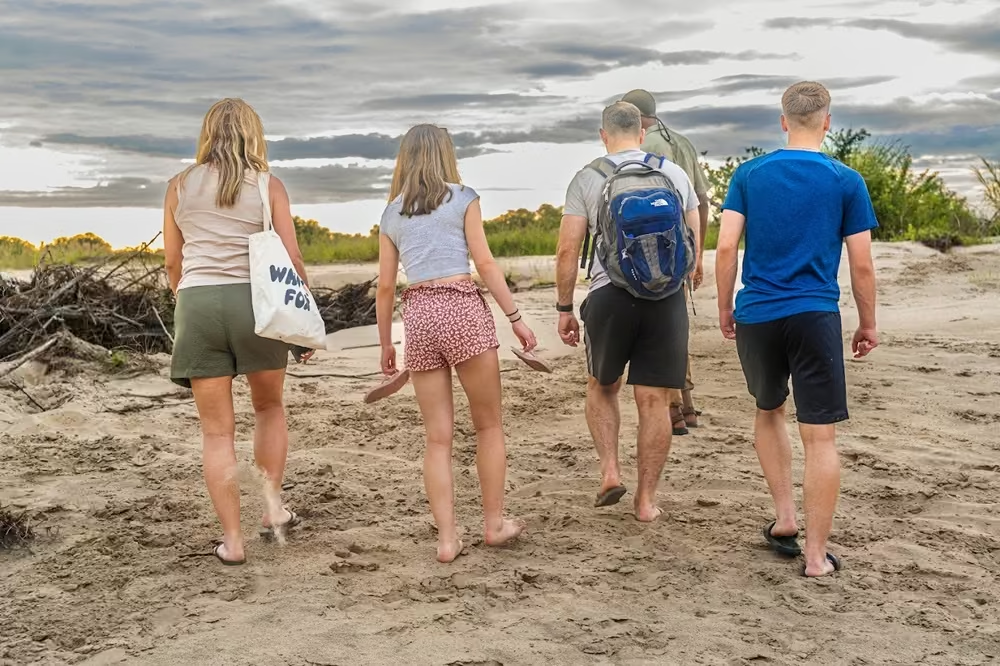
Walking safaris offer a completely different way to experience the bush. Instead of viewing wildlife from a vehicle, you step directly into their environment, guided by professional safari guides and armed rangers who ensure safety while interpreting the landscape in detail.
These walks focus less on distance and more on awareness and understanding. Guests often learn how to interpret subtle signs of the bush, including:
- Animal tracks and spoor identification
- Traditional medicinal plant uses
- Bird calls, insects, and ecological sounds
- Predator-prey relationships within the ecosystem
Walking safaris provide a slower, more immersive experience that deepens appreciation for the natural world. It is often described as one of the most educational and grounding activities in the park.
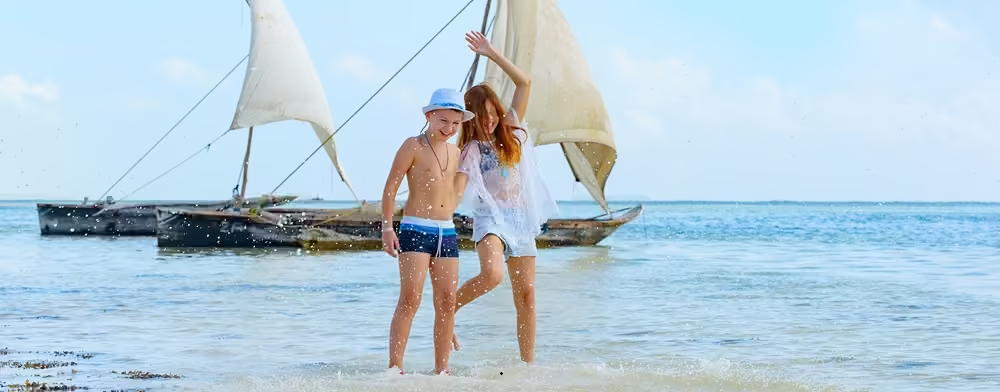
Zanzibar: The Perfect Beach Extension
After days spent exploring the raw wilderness of Nyerere, the transition to Zanzibar feels like entering a completely different world. The shift from untamed bush to soft ocean breeze creates a powerful contrast that defines the essence of a Tanzania bush and beach safari.
Zanzibar is a semi-autonomous archipelago off the coast of Tanzania, widely known for its pristine beaches, rich cultural heritage, and historic trading significance. It is one of Africa’s most iconic island destinations and a natural extension of any safari itinerary.
What Makes Zanzibar World-Famous?
Zanzibar is far more than a beach destination—it is a cultural crossroads shaped by centuries of trade, migration, and cultural exchange.
Its main attractions include:
- Over 25 km of soft white sandy beaches
- Warm Indian Ocean waters averaging 26–29°C year-round
- UNESCO-listed Stone Town with rich historical architecture
- Spice plantations offering immersive cultural tours
- Vibrant coral reefs ideal for snorkeling and diving
Stone Town stands out as the cultural heart of Zanzibar. Its narrow alleyways, carved wooden doors, and bustling markets reflect influences from Swahili, Arab, Persian, and European civilizations. Walking through it feels like stepping into a living museum of Indian Ocean history.
Beach Experiences in Zanzibar
Zanzibar offers a diverse range of coastal experiences, allowing travelers to choose the atmosphere that best suits their travel style.
- Nungwi & Kendwa: Known for lively beaches, spectacular sunsets, and nightlife options
- Paje & Jambiani: Popular for kite surfing, relaxed beach life, and bohemian coastal charm
- Matemwe: Offers peaceful luxury resorts and quiet, secluded beaches
This diversity makes Zanzibar highly flexible, whether for honeymooners, families, or adventure travelers seeking water sports and cultural exploration.
Together, Nyerere and Zanzibar create one of the most balanced and rewarding travel experiences in Africa—combining raw wilderness with coastal serenity in a single journey.
How to Travel from Nyerere to Zanzibar and Vice Versa
One of the biggest advantages of combining Nyerere National Park and Zanzibar is how smoothly the journey connects two very different landscapes. Despite the remote wilderness of southern Tanzania, the transfer between bush and beach is well organized, allowing travelers to move efficiently between safari activities and island relaxation with minimal disruption.
Fly-in Safari (Recommended Option)
The most convenient and popular way to travel between Nyerere and Zanzibar is by scheduled light aircraft flights. This option is designed for comfort, speed, and overall experience quality, especially for travelers on mid-range and luxury itineraries.
- Duration: 1.5–2 hours
- Cost: $250–$450 per person (one way)
- Comfort level: High
- Experience: Scenic aerial views over rivers, plains, and coastal landscapes
Flights usually operate via Dar es Salaam or, depending on the season and routing schedules, may include direct connections from airstrips inside or near Nyerere National Park to Zanzibar’s main airport.
This option significantly reduces travel fatigue and allows more time to be spent on actual safari or beach activities. It is particularly ideal for honeymooners, photographers, and travelers on tight schedules who want a seamless transition from wildlife viewing to ocean relaxation.
Road + Flight Combination (Flexible Budget Option)
For travelers seeking a more cost-conscious approach, a combination of road transfer and flight is also available. This option balances affordability with reasonable travel efficiency while still maintaining access to Zanzibar’s Island experience.
- Duration: 5–6 hours road transfer + flight
- Cost: $180–$300 per person
- Comfort level: Moderate
- Experience: More budget-friendly with a chance to see rural Tanzania landscapes
This route typically involves a road transfer from Nyerere to a regional airport such as Dar es Salaam, followed by a domestic flight to Zanzibar. While longer in total travel time, it remains a practical choice for group safaris, families, and travelers looking to optimize their overall budget.
Choosing the Right Option
Both travel methods connect the bush and beach experience effectively. The best choice depends on budget, time availability, and comfort preference. Fly-in safaris remain the most efficient and immersive option, while the road-plus-flight combination offers greater flexibility for cost-sensitive itineraries.
Complete Safari Cost Breakdown
Understanding pricing is an important part of planning a Nyerere National Park to Zanzibar safari, because costs vary widely depending on travel style, level of comfort, season, and the type of experience you choose. Tanzania safaris are not “fixed-price holidays”—they are tailor-made experiences, and pricing reflects logistics, exclusivity, and accommodation standards.
At the lower end, budget safaris typically range from $250 to $400 per person per day. These packages usually include shared safari vehicles, basic lodges or tented camps, and group departures. While simple, they still offer excellent wildlife viewing and access to the same national parks. Budget options are best suited for travelers who prioritize experience over comfort and are open to longer travel times and shared arrangements.
The mid-range safari category is the most popular, averaging $400 to $650 per person per day. This level provides a strong balance between comfort and affordability. Travelers enjoy private or semi-private safari vehicles, professional guides, and well-selected lodges or tented camps with en-suite facilities. This category often includes better food, more flexible schedules, and improved service quality, making it ideal for families, couples, and first-time safari travelers.
At the top end, luxury safaris range from $700 to $1,500+ per person per day. These experiences focus on exclusivity, privacy, and high-end service. Guests typically fly between destinations using light aircraft, stay in premium lodges or luxury tented camps, and enjoy private guiding services. Extras may include bush dinners, sundowner experiences, spa treatments, and personalized itineraries designed around individual preferences.
For the Zanzibar extension, accommodation costs vary separately. Budget hotels range from $80 to $150 per night, mid-range stays from $150 to $300, and luxury beachfront resorts can exceed $1,200 per night, especially during peak season.
Overall, safari pricing reflects not only accommodation and transport but also park fees, guide expertise, fuel costs, and the remote nature of southern Tanzania. Understanding these elements helps travelers choose the right safari style and set realistic expectations for a smooth and rewarding bush and beach experience.
Best Time to Visit Nyerere and Zanzibar
Timing plays a major role in safari quality.
Nyerere National Park
- Best wildlife viewing: June – October
- Dry season advantages: easier animal spotting
- Animals gather around rivers and water sources
Zanzibar
- Best beach weather: June – March
- Calm seas and clear skies
- Ideal for swimming, diving, and relaxation
Best combined travel window
The best time for a full bush and beach safari is June to October, when wildlife viewing and beach conditions are both optimal.
Sample Itineraries (Bush & Beach Safari Ideas)
7-Day Safari (Classic Experience)
Day 1: Arrival in Dar es Salaam
Days 2–4: Nyerere safari (game drives + boat safari)
Day 5: Fly to Zanzibar
Days 6–7: Beach relaxation and Stone Town tour
10-Day Luxury Safari
Days 1–5: Nyerere National Park
- Game drives
- Walking safari
- Rufiji River boat safari
- Luxury beach resort
- Spice tour
- Stone Town cultural experience
Honeymoon Safari Option
- Private fly-in safari
- Romantic bush dinners
- Sunset dhow cruise in Zanzibar
- Luxury beachfront villa stay
Game Package | Nyerere National Park Safaris from Zanzibar & Dar es Salaam
Our game packages offer flexible safari options designed for travelers based in Zanzibar or Dar es Salaam. Whether you have limited time or want a deeper wilderness experience, you can choose between a same-day safari, a 2-night, or a 3-night package, all providing seamless access to one of Africa’s most spectacular wildlife destinations.
The journey begins with a morning flight from Zanzibar or Dar es Salaam into the Nyerere ecosystem. On arrival, you are met by an experienced safari guide and immediately begin your wildlife experience inside Nyerere National Park, one of the largest and most untouched protected areas in Africa.
Same-Day Game Package (Quick Safari Experience)
This option is ideal for travelers with limited time who still want a true safari experience.
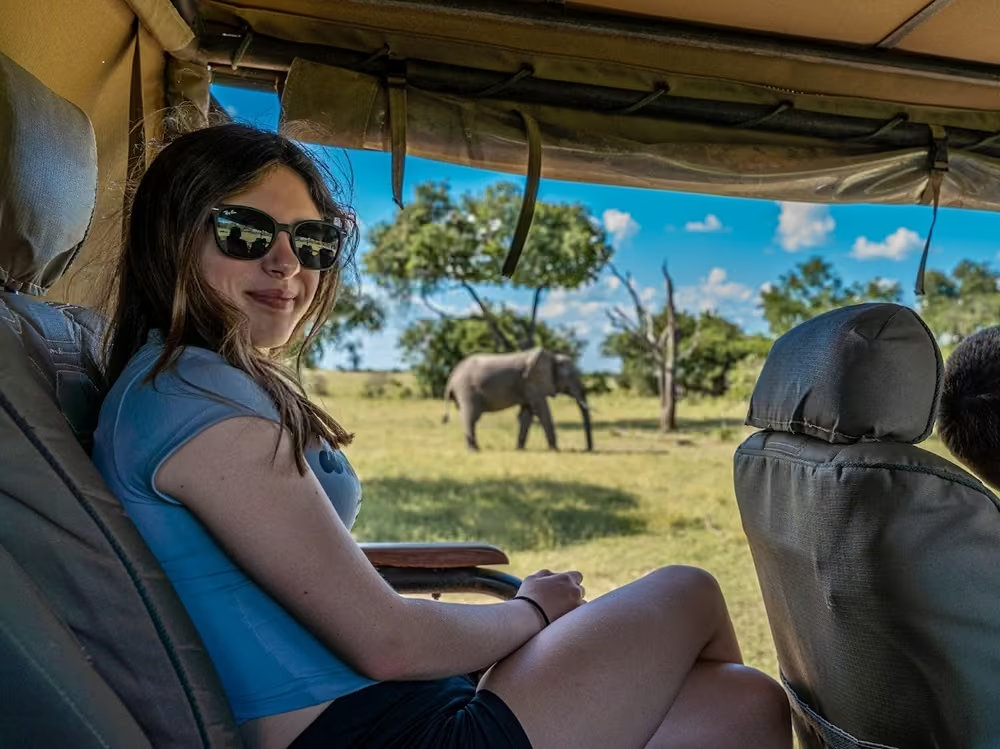
After arrival, you enjoy a full-day game drive exploring diverse habitats including savannah, woodland, and riverine areas. Expect to see elephants, lions, giraffes, buffalo, and hippos in their natural environment. The highlight of the day is the opportunity to witness wildlife activity around water sources and open plains.
For those with extended timing, a Rufiji River boat safari can be added, offering close encounters with hippos, crocodiles, and abundant birdlife. In the evening, you return by flight to Zanzibar or Dar es Salaam.
2-Night Safari Package (Balanced Experience)
The 2-night package offers a deeper but still compact safari experience. It includes game drives, one boat safari, and overnight stays in a comfortable lodge or tented camp.
Day one begins with arrival and an afternoon game drive. Day two features a combination of a morning game drive and a scenic boat safari on the Rufiji River, followed by relaxation at your camp. On the final day, a short morning drive completes your safari before returning to the coast.
This option is ideal for travelers seeking a balance between time efficiency and meaningful wildlife immersion.
3-Night Safari Package (Full Immersion)
The 3-night package is designed for a more relaxed and in-depth exploration of Nyerere. It includes multiple game drives across different areas of the park, maximizing wildlife sightings and photographic opportunities.
Guests enjoy sunrise and sunset game drives, a full-day safari experience, and a dedicated boat safari on the Rufiji River. This combination allows for a richer understanding of animal behavior and ecosystem diversity.
Why Choose This Game Package?
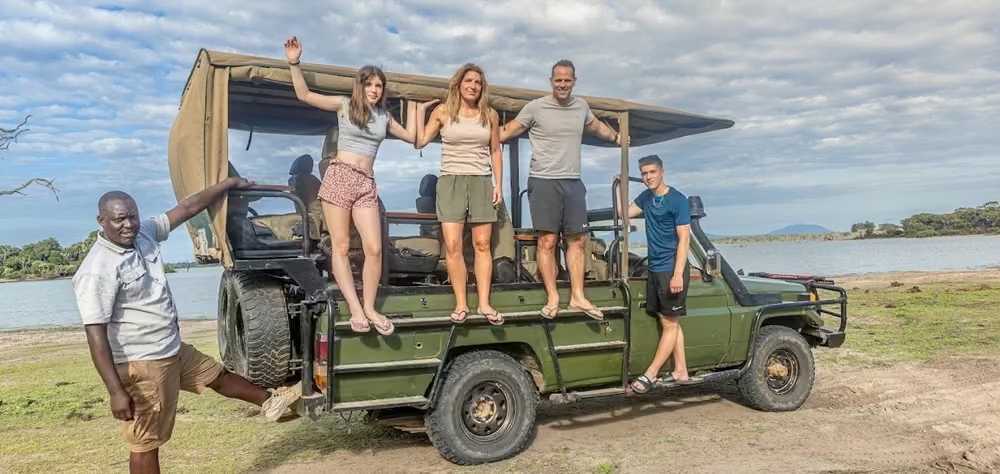
- Seamless fly-in access from Zanzibar or Dar es Salaam
- Flexible options: same-day, 2-night, or 3-night safaris
- High chances of seeing the Big Five and rare species
- A combination of game drives and boat safaris
- Suitable for all travel styles, from budget to luxury
This game package is designed to deliver maximum flexibility while maintaining a high-quality safari experience in one of Tanzania’s most exclusive wildlife destinations.
Why This Safari Route Is Growing Rapidly
Tourism trends show strong growth in bush and beach combinations.
- Demand has increased by 35% in the last 5 years
- Over 60% of luxury safari travelers now include Zanzibar
- Southern Tanzania receives only 15% of total safari visitors, making it highly exclusive
This makes the route both trendy and uncrowded.
Sustainability and Conservation Importance
Choosing Nyerere also supports conservation efforts. The Park is part of a larger ecosystem that protects endangered species and helps maintain ecological balance in southern Tanzania.
Tourism revenue directly supports:
- Anti-poaching efforts
- Community development programs
- Wildlife protection initiatives
- Habitat conservation projects
Responsible tourism ensures that future generations can continue to experience this wilderness.
Why Book with Calabash Adventures
Planning a combined bush and beach safari requires precision and local knowledge.
At Calabash Adventures, we provide:
- Tailor-made safari planning
- Fly-in logistics coordination
- Private guide arrangements
- Handpicked lodges and camps
- Seamless bush-to-beach itineraries
Our focus is on creating experiences that balance comfort, adventure, and authenticity.
Two Worlds, One Journey
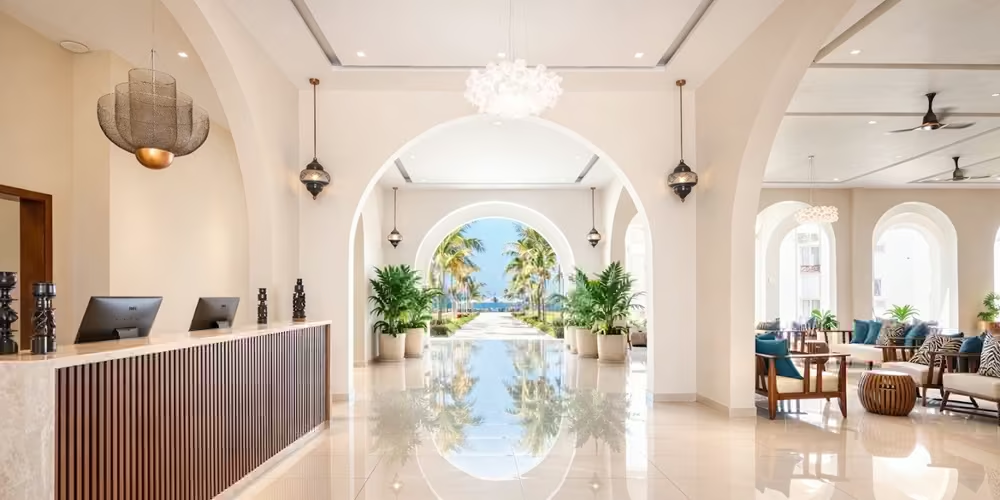
A Nyerere National Park to Zanzibar safari is more than just a holiday. It is a journey through two completely different worlds that exist in perfect harmony within Tanzania.
In Nyerere, you experience silence, wilderness, and raw nature. In Zanzibar, you experience rhythm, ocean breeze, and relaxation.
Together, they create one of the most complete travel experiences in Africa.
This is not just a safari—it is a story of contrast, connection, and unforgettable memories.
Related Articles
Zanzibar Travel Guide & Tours.
The Spice Island of Africa
Zanzibar is one of Africa’s most enchanting island destinations, a place where history, culture, spice heritage, and pristine Indian Ocean beaches come together to create a truly unforgettable travel experience. As Calabash Adventures, we design journeys across Tanzania that connect wildlife, culture, and coastal relaxation, and Zanzibar remains one of the most requested destinations by travelers seeking a perfect balance between adventure and leisure. This comprehensive Zanzibar Travel Guide & Tours overview is designed to help you understand everything you need before planning your trip—from costs, best time to visit, activities, hotels, transport, and practical travel advice—so you can make informed decisions and enjoy a seamless island experience.
A Cultural Crossroads of History and Heritage
Zanzibar is not just a beach destination; it is a cultural crossroads shaped by African, Arab, Indian, and European influences. The heart of the island, Stone Town, is a UNESCO World Heritage Site filled with narrow alleys, carved wooden doors, spice markets, and centuries-old architecture that tells the story of trade, migration, and cultural blending. Outside Stone Town, the island stretches into white sandy beaches framed by turquoise waters, coral reefs, and small fishing villages where life moves at a slow and peaceful rhythm. Whether you are traveling for a honeymoon, family holiday, luxury escape, or budget adventure, Zanzibar offers something for every type of traveler.
Combining Zanzibar with a wildlife Safari Experience
Combining Zanzibar with a Tanzania safari becomes even more powerful when you expand the journey beyond the classic northern circuit and include the southern and western wilderness areas. A well-structured Zanzibar Travel Guide is not only about beaches and culture—it is also about understanding how easily the island connects to some of Africa’s most diverse safari ecosystems, including the Serengeti migration, Nyerere, and Mikumi.
For many travelers, the experience begins in the north with the legendary Serengeti National Park, home to the Great Wildebeest Migration. This natural spectacle, often described as the greatest wildlife show on earth, involves millions of wildebeest, zebras, and gazelles moving across endless plains in search of fresh grazing. Depending on the season, visitors may witness dramatic river crossings at the Mara River or vast calving scenes in the southern Serengeti. It is intense, cinematic, and emotionally unforgettable.
After this northern safari experience, travelers often transition to Zanzibar for relaxation. However, the journey does not have to end there. From Zanzibar, it is also possible to access the southern circuit, making the experience even richer and more flexible.
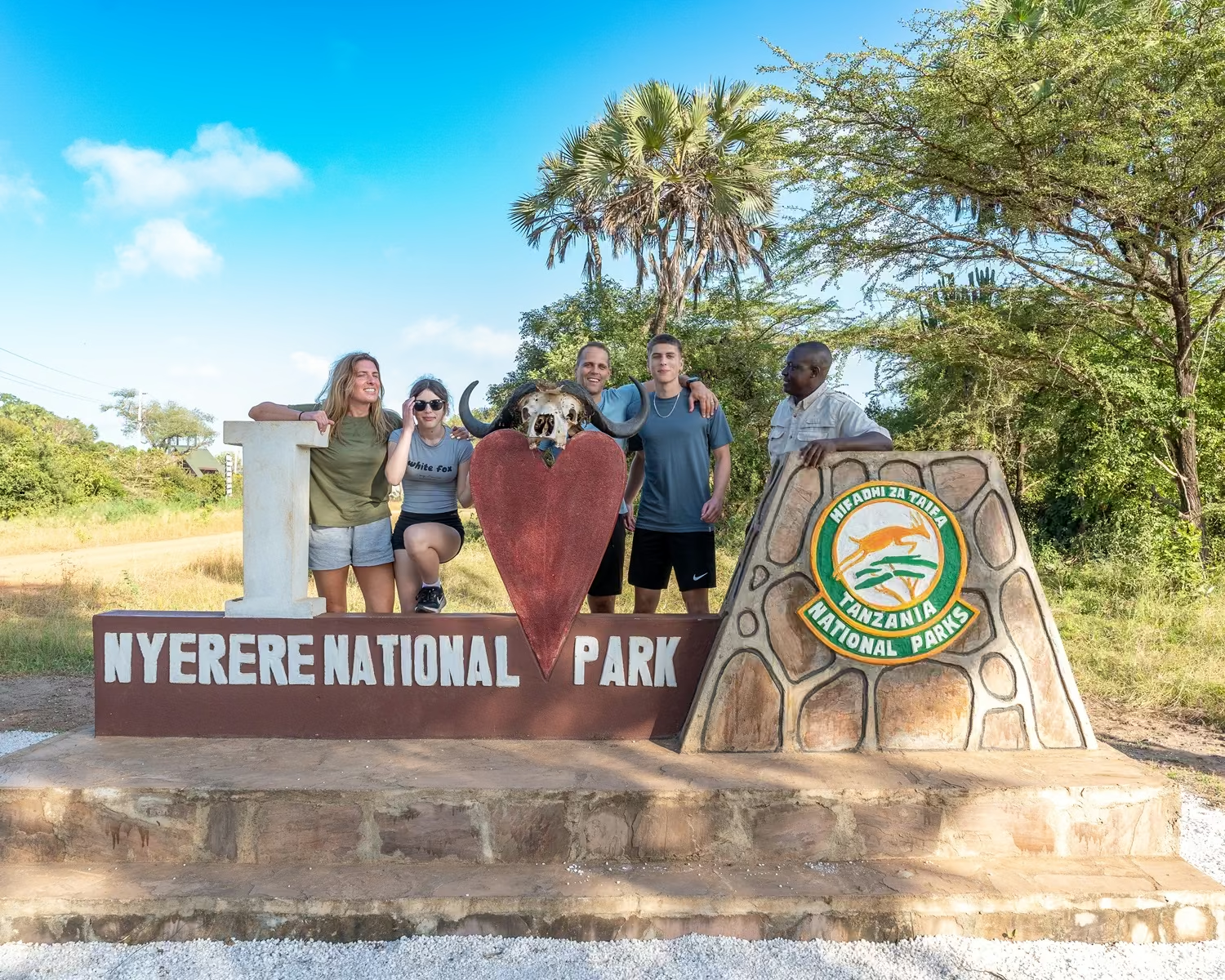
One of the most popular extensions is a fly-in safari to Nyerere National Park (formerly Selous Game Reserve). This is Africa’s largest protected wildlife area, where the landscapes are shaped by rivers, lakes, and untouched wilderness. Boat safaris on the Rufiji River, walking safaris, and game drives create a completely different safari rhythm compared to the Serengeti. Wildlife here feels more secluded and intimate, with fewer vehicles and a strong sense of wilderness immersion. Many travelers choose Nyerere because it easily combines with Zanzibar flights, making it one of the most seamless safari extensions from the coast.
Another accessible option is Mikumi National Park, often referred to as the “mini Serengeti” due to its open plains and high wildlife concentration. Located closer to Dar es Salaam, Mikumi is ideal for shorter safari add-ons from Zanzibar. Travelers can fly or take a short connection and enjoy sightings of elephants, giraffes, lions, zebras, and buffalo within a compact and easy-to-reach park. It is especially popular for families and travelers with limited time who still want a true safari experience after their beach holiday.
At Calabash Adventures, we design itineraries that connect these experiences into a smooth journey. A traveler might begin with the Serengeti migration, continue to the Ngorongoro Crater, unwind on Zanzibar’s beaches, and then extend further into Nyerere or Mikumi for a final taste of wild Africa. This multi-layered approach transforms a simple holiday into a complete exploration of Tanzania’s diversity.
The beauty of combining Zanzibar with these safaris is the contrast. The Serengeti offers scale and drama. Nyerere offers silence and river wilderness. Mikumi offers accessibility and open plains. Zanzibar offers restoration and ocean calm. Together, they create a rhythm of movement and stillness that defines the best of East African travel.
This is what a modern Zanzibar Travel Guide truly represents—not just an island escape, but a gateway that connects ocean paradise with some of the richest wildlife landscapes on the continent.
Best Time to Visit Zanzibar
When it comes to the best time to visit Zanzibar, the island is a year-round destination, but the most ideal months are June to October and December to February. These periods offer sunny skies, calm seas, and perfect beach conditions. The rainy seasons occur from March to May (long rains) and November (short rains), but even during these months, Zanzibar remains warm and enjoyable, with fewer tourists and lower hotel prices. For travelers seeking budget-friendly travel, the rainy season can offer excellent value.
Accommodation Options in Zanzibar – From Budget Stays to Ultra-Luxury Island Resorts
Accommodation in Zanzibar is incredibly diverse, offering something for every type of traveler—from backpackers seeking simple guesthouses to honeymooners looking for exclusive private villas overlooking the Indian Ocean. The island is well developed for tourism, and each region offers a different atmosphere, allowing travelers to choose between cultural immersion, lively beach scenes, or total seclusion. At Calabash Adventures, we always match accommodation choices with travel style, ensuring comfort, location, and value align perfectly with each itinerary.
Budget travelers can expect to pay around 30 to 80 USD per night for basic lodges, small hotels, and locally run guesthouses. These properties are often simple but clean and welcoming, usually including breakfast and essential amenities such as Wi-Fi and fan or air-conditioned rooms. Budget accommodation is commonly found in Stone Town, Jambiani, and parts of Paje, where travelers enjoy authentic local experiences and easy access to beaches or cultural sites.
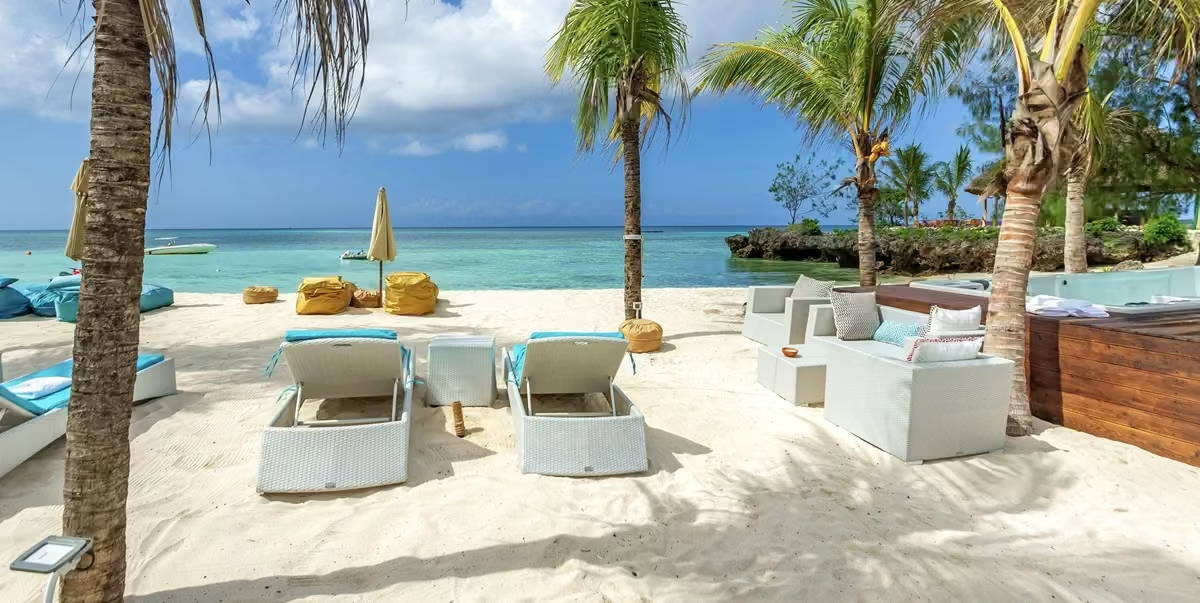
Mid-range accommodation in Zanzibar typically ranges between 100 and 250 USD per night, offering a strong balance of comfort and affordability. These hotels often include swimming pools, beachfront access, air-conditioned rooms, on-site restaurants, and better service standards. Popular mid-range areas include Nungwi, Kendwa, and Paje, where travelers can enjoy both vibrant beach life and relaxation. This category is ideal for families, couples, and small groups looking for comfort without high luxury costs.
Luxury accommodation in Zanzibar ranges from 300 to over 1,500 USD per night, especially in exclusive beachfront locations such as Nungwi, Kendwa, Matemwe, Michamvi, and Paje. These properties redefine tropical luxury with private beaches, infinity pools, spa and wellness centers, fine dining restaurants, personalized butler services, and breathtaking ocean views. Many luxury resorts also offer curated experiences such as private dhow cruises, candlelit beach dinners, and in-room spa treatments.
Some of the most highly regarded and internationally recognized hotels and resorts in Zanzibar include Zuri Zanzibar, known for its contemporary design and stunning sunsets over Kendwa Beach. Another iconic property is The Residence Zanzibar, a luxurious villa-style resort offering privacy, elegance, and long stretches of white sandy beach ideal for honeymooners. In Stone Town, Park Hyatt Zanzibar provides refined luxury within walking distance of historic landmarks, making it perfect for cultural travelers who want comfort and location combined.
For travelers seeking beachfront elegance in the northern coast, Baraza Resort and Spa Zanzibar offers one of the most luxurious boutique villa experiences on the island, blending Swahili architecture with world-class spa facilities. In the same region, Melia Zanzibar is a well-known all-inclusive resort offering panoramic ocean views, multiple dining options, and family-friendly facilities. On the northern beaches, Riu Palace Zanzibar is popular for its beachfront setting, modern amenities, and all-inclusive comfort.
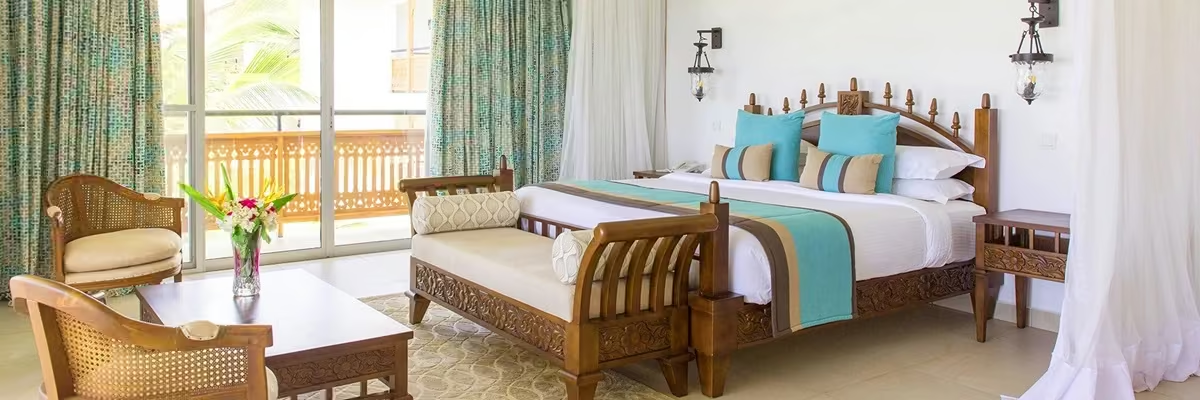
Other notable properties include Gold Zanzibar Beach House & Spa, famous for its soft white sand beach and stylish beachfront suites, and boutique eco-luxury options scattered along the east coast, particularly in Paje and Matemwe, where travelers enjoy kite surfing, tranquility, and uninterrupted ocean views.
Each region of Zanzibar offers a different accommodation experience. Nungwi and Kendwa are lively with vibrant nightlife and beautiful sunsets, making them ideal for social travelers. Paje and Jambiani are more relaxed and popular with kite surfers and younger travelers. Matemwe and Michamvi offer seclusion and romantic escapes, while Stone Town provides cultural depth and historical charm.
At Calabash Adventures, we carefully select accommodation based on each traveler’s expectations, whether it is a honeymoon, family holiday, luxury escape, or budget adventure. Our goal is to ensure that every stay in Zanzibar enhances the overall journey—combining comfort, location, and authentic island hospitality so that guests experience the very best of the Spice Island.
Transportation Around Zanzibar
Transportation within Zanzibar is relatively simple but varies in comfort and cost. Airport transfers to beach hotels range from 30 to 80 USD, depending on distance and vehicle type. Private car hire with a driver costs between 50 and 100 USD per day, which is ideal for exploring the island at your own pace. Shared taxis and dala-dalas (local minibuses) are cheaper, costing just a few dollars, but they are less comfortable and best suited for adventurous travelers. Boat transfers to nearby islands or snorkeling spots typically range from 20 to 100 USD, depending on distance and group size.
Stone Town Tours – A Journey Through History and Living Culture
Stone Town is the cultural and historical heartbeat of Zanzibar, a UNESCO World Heritage Site where centuries of African, Arab, Persian, Indian, and European influence come together in a fascinating blend. This is not just a sightseeing stop—it is an immersive journey through time, where every narrow alley, carved wooden door, and coral-stone building tells a story of trade, culture, slavery, and resilience. At Calabash Adventures, we consider Stone Town one of the most meaningful experiences for any traveler visiting Zanzibar because it connects visitors to the island’s deep historical roots and living heritage.
A guided Stone Town tour typically costs between 30 and 70 USD per person, depending on group size, duration, and level of customization. Most tours last between 2 and 5 hours, but many travelers choose a full-day experience to fully absorb the atmosphere, history, and hidden corners of the town. Walking through Stone Town feels like stepping into a living museum where time has slowed down, yet life continues vibrantly around you.
One of the most iconic landmarks is the House of Wonders (Beit-al-Ajaib), once the grandest building in East Africa and a symbol of Zanzibar’s royal past. Although partially under restoration, it remains a powerful reminder of the island’s former sultanate glory. Nearby stands the Old Fort, the oldest structure in Stone Town, originally built by the Omanis in the 17th century to defend against Portuguese invasion. Today, it serves as a cultural center where local artists perform traditional music, dance, and craft exhibitions.
Another deeply emotional and educational stop is the Former Slave Market and Anglican Cathedral, where visitors learn about Zanzibar’s role in the East African slave trade. The experience is sobering but essential, offering insight into a painful chapter of history that shaped the region. The underground slave chambers remain preserved, giving visitors a powerful sense of the human suffering that once took place there.
Stone Town is also the birthplace of global music legend Freddie Mercury, lead singer of Queen. His childhood home remains a point of fascination for music lovers worldwide, adding a modern cultural layer to the town’s historical depth.
Beyond monuments, Stone Town is alive with everyday life. The Darajani Market is a bustling hub where locals trade fresh fish, spices, vegetables, and tropical fruits. The air is filled with the scent of cloves, cardamom, and grilled street food. This market experience is one of the best ways to understand daily life in Zanzibar and interact with local vendors.
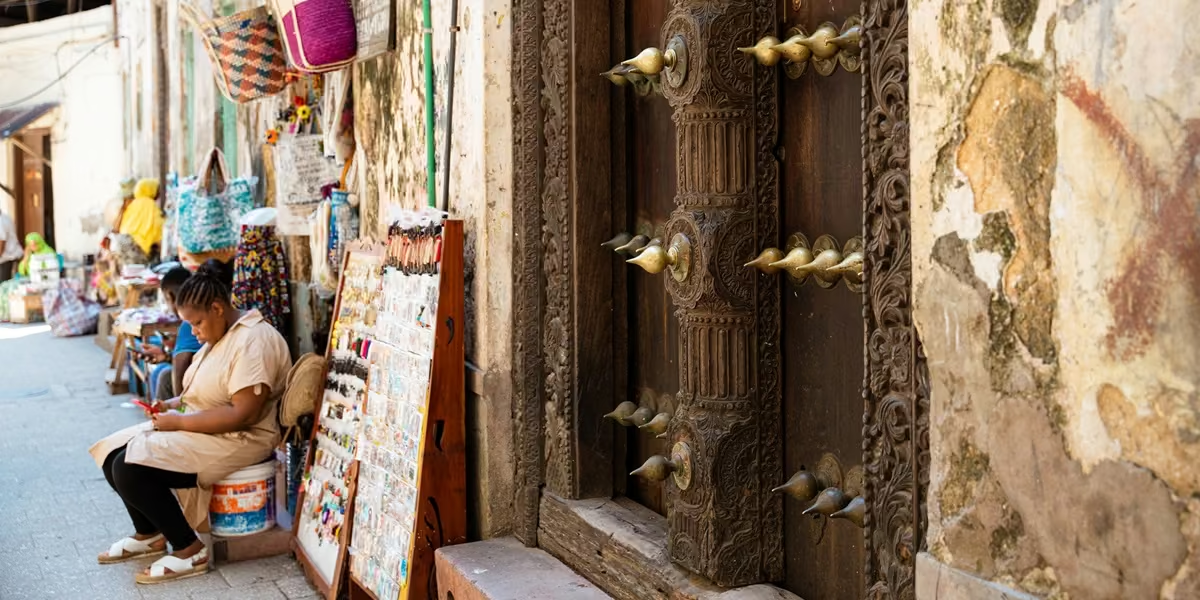
As you walk deeper into the labyrinth of narrow streets, you will discover beautifully carved Zanzibari doors—each design symbolizing wealth, heritage, and cultural identity. These doors are among the most photographed features of Stone Town and represent the island’s rich Swahili craftsmanship.
Stone Town also offers incredible rooftop cafés and seaside viewpoints where travelers can relax with fresh juice or spiced coffee while watching the sunset over the Indian Ocean. The golden light reflecting off the coral stone buildings creates one of the most magical atmospheres in East Africa.
At Calabash Adventures, we often recommend combining Stone Town tours with a spice farm visit or sunset dhow cruise to create a complete cultural experience. Stone Town is not just about history—it is about understanding Zanzibar’s soul, its people, and its journey through time.
Spice Farm Tours – The Heart of Zanzibar’s Identity
Zanzibar is famously known as the “Spice Island,” and spice farm tours are one of the most authentic and sensory-rich experiences on the island. These tours take visitors beyond the beaches and into the lush countryside, where spices are grown, harvested, and used in everyday life. At Calabash Adventures, we describe spice tours as a journey for all five senses—sight, smell, taste, touch, and sound.
A guided spice tour typically costs between 25 and 60 USD per person and usually lasts 2 to 3 hours. During the tour, visitors walk through plantations where local farmers demonstrate how spices grow naturally in tropical conditions. You will see cloves hanging from trees, cinnamon bark being carefully peeled, vanilla vines climbing tall supports, and nutmeg fruits growing in abundance.
What makes this experience special is the hands-on interaction. Travelers are invited to touch, smell, and taste fresh spices directly from the plants. You may sample tropical fruits such as jackfruit, pineapple, mango, and coconut, often picked fresh from the trees during the walk. Guides also demonstrate traditional uses of spices in cooking, medicine, and cosmetics, giving a deeper understanding of their cultural and economic importance.

Cloves remain one of Zanzibar’s most important exports, historically shaping the island’s economy and global trade connections. Cinnamon, nutmeg, black pepper, and cardamom are also widely cultivated and used in both local and international cuisine. The fragrance of these spices fills the air, creating a natural aromatherapy experience that travelers never forget.
Many spice tours include a traditional Swahili cooking demonstration, where visitors learn how to prepare local dishes using freshly harvested ingredients. This adds an interactive culinary dimension to the experience and allows travelers to connect more deeply with Zanzibar’s food culture.
Spice tours also support local communities by providing income to farmers and preserving traditional agricultural practices. At Calabash Adventures, we strongly encourage ethical tourism experiences that benefit local livelihoods while offering travelers meaningful engagement.
Beach Activities and Ocean Adventures – Zanzibar’s Natural Playground
Zanzibar’s coastline is one of the most beautiful in the world, offering powdery white sand beaches, crystal-clear turquoise waters, and vibrant coral reefs. Zanzibar Travel Guide activities are the highlight of any Zanzibar holiday, providing a perfect balance of relaxation and adventure.
The island offers a wide range of ocean experiences, including snorkeling, scuba diving, kite surfing, dolphin watching, deep-sea fishing, kayaking, and sunset cruises. Snorkeling trips typically cost between 30 and 80 USD per person, while scuba diving excursions range from 100 to 180 USD depending on dive sites, equipment, and duration.
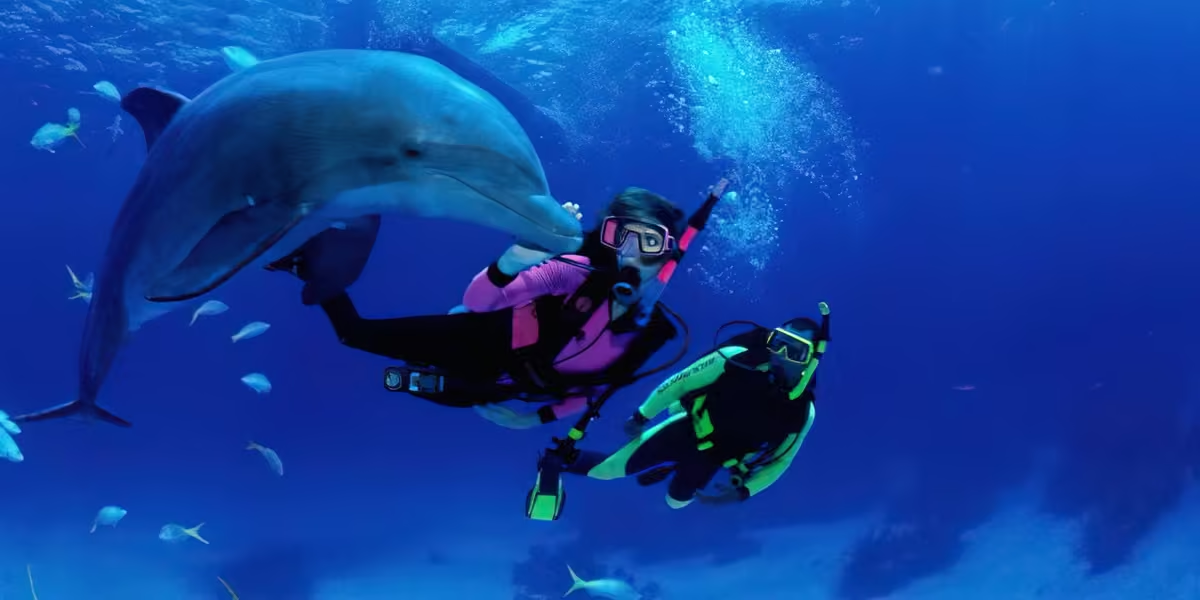
One of the most famous marine destinations is Mnemba Atoll, a protected marine reserve known for its exceptional visibility and rich biodiversity. Here, travelers can swim alongside colorful reef fish, sea turtles, and sometimes dolphins. The coral gardens around Mnemba are among the healthiest in the region, making it a must-visit for underwater enthusiasts.
Deep-sea fishing is also popular, with opportunities to catch species such as tuna, kingfish, marlin, and barracuda. These trips typically range from 150 to 500 USD depending on boat type and duration.
Kite Surfing in Paje – Africa’s Wind Capital
Paje Beach on Zanzibar’s southeast coast is internationally recognized as one of the best kite surfing destinations in Africa. Its long shallow waters, consistent trade winds, and soft sandy beaches create perfect conditions for both beginners and advanced riders.
Kite surfing lessons typically cost between 50 and 120 USD per session, with multi-day courses available for those wanting to learn more seriously. Equipment rental is also available for experienced surfers. The beach atmosphere is vibrant yet relaxed, with beachfront cafés, surf schools, and a youthful international community.
Even if you do not participate, watching the colorful kites dance across the sky is a beautiful experience in itself, especially during sunset when the ocean reflects golden light.
Dolphin Tours in Kizimkazi – A Responsible Marine Encounter
Kizimkazi, located in southern Zanzibar, is famous for its dolphin population and early morning boat excursions. Dolphin tours typically cost between 40 and 90 USD per person and involve boat trips where travelers may observe bottlenose and humpback dolphins in their natural habitat.
However, responsible tourism is extremely important here. At Calabash Adventures, we emphasize ethical practices that avoid chasing or disturbing dolphins. The goal is respectful observation, ensuring that marine life is protected while still allowing visitors to enjoy this magical encounter.
The experience of seeing dolphins glide through the Indian Ocean waves at sunrise is unforgettable and often described as one of the highlights of a Zanzibar trip.
Sunset Dhow Cruises – Romance on the Indian Ocean
A sunset dhow cruise is one of the most peaceful and romantic experiences in Zanzibar. These traditional wooden sailing boats have been used for centuries along the Swahili coast, originally for trade and fishing.
Today, dhow cruises offer travelers a chance to sail along the coastline while enjoying breathtaking sunset views over the Indian Ocean. Prices typically range between 40 and 100 USD per person, depending on whether the cruise is shared or private.
As the dhow glides across calm waters, guests enjoy soft ocean breezes, traditional music, and sometimes light refreshments or seafood snacks. The sky transforms into shades of orange, pink, and gold, creating a dreamlike atmosphere perfect for couples, honeymooners, and photographers.
At Calabash Adventures, we often recommend ending a Zanzibar day with a dhow cruise because it captures the essence of the island—peaceful, romantic, and deeply connected to the sea.
Food and Culinary Experiences in Zanzibar
Food in Zanzibar is another highlight of the travel experience. The island’s cuisine is heavily influenced by spices, seafood, and Swahili culture. Local meals at small restaurants or street food stalls cost between 3 and 10 USD per dish. Mid-range restaurants charge between 10 and 25 USD per meal, while fine dining in luxury resorts can range from 30 to 100 USD per person. Seafood is especially popular, with fresh lobster, octopus curry, grilled fish, and prawns commonly available.
Budget Breakdown for Zanzibar Travel
For budget planning, a Zanzibar holiday can be tailored to different travel styles. Budget travelers can expect to spend around 70 to 120 USD per day, including accommodation, food, and basic activities. Mid-range travelers typically spend between 150 and 300 USD per day, enjoying better hotels and guided tours. Luxury travelers may spend 400 to 1,000+ USD per day depending on resort choice, private tours, and exclusive experiences.
Zanzibar Holiday Packages and Costs
A typical 5-day Zanzibar tour package may cost around 600 to 1,500 USD per person for mid-range travel, while luxury packages can range from 2,000 to 5,000 USD depending on inclusions such as private transfers, boutique resorts, and exclusive experiences. Combined safari and Zanzibar packages usually start from 2,500 USD per person and can go up to 8,000 USD or more for high-end luxury itineraries including Serengeti fly-in safaris and private beach villas.
Travel Requirements and Important Information
Travelers should also be aware of practical considerations such as visa requirements, travel insurance, and health precautions. Most visitors require a Tanzanian tourist visa, which can be obtained on arrival or online. A yellow fever certificate may be required depending on your country of origin. Travel insurance covering medical emergencies, cancellations, and evacuation is highly recommended.
Safety and Cultural Etiquette in Zanzibar
In terms of safety, Zanzibar is generally safe for tourists, especially in major beach areas and tourist zones. However, standard travel precautions should always be followed. Zanzibar is a predominantly Muslim island, so modest dress is encouraged in Stone Town and villages, although beachwear is acceptable in resort areas.
Why Travel with Calabash Adventures
At Calabash Adventures, we believe Zanzibar is more than just a destination—it is an experience of relaxation, discovery, and cultural connection. Our Zanzibar Travel Guide & Tours packages are carefully designed to combine comfort, authenticity, and adventure, ensuring every traveler experiences the best of the island.
The Magic of Zanzibar
From spice-scented markets and historic Stone Town streets to turquoise waters and palm-lined beaches, Zanzibar remains one of the most magical destinations in Africa. With thoughtful planning, clear budget guidance, and the right travel partner, your Zanzibar holiday becomes not just a trip but a lifetime memory shaped by beauty, culture, and the warm spirit of the Swahili coast.
Related Articles

Wildlife, Safari Activities, Best Time to Visit, How to Get There, Where to Stay & Sample Itineraries
Discover One of Africa’s Last Great Wilderness Areas
Katavi National Park is one of the most extraordinary safari destinations in Africa and arguably Tanzania’s best-kept secret. Hidden deep in the country’s remote western frontier, far from the busy safari circuits of northern Tanzania, Katavi offers something increasingly rare in modern travel: genuine wilderness. Here, visitors can spend hours exploring vast floodplains, river systems, woodlands, and seasonal lakes without encountering another safari vehicle. The result is an authentic safari experience where nature dictates the rhythm of every day and wildlife encounters feel intimate, unpredictable, and deeply rewarding.
Covering approximately 4,471 square kilometers, Katavi National Park is Tanzania’s third-largest national park and one of the most untouched ecosystems on the continent. While famous parks such as Serengeti and Ngorongoro attract hundreds of thousands of visitors each year, Katavi welcomes only a fraction of those numbers, making it a paradise for travelers seeking exclusivity, photographers searching for uninterrupted wildlife encounters, and safari enthusiasts looking to experience Africa as it once was.
At Calabash Adventures, we believe Katavi represents the ultimate frontier safari destination. Whether you are planning your first visit to Tanzania or are a seasoned safari traveler searching for somewhere truly special, this comprehensive guide covers everything you need to know about Katavi National Park.
Where is Katavi National Park?
Katavi National Park is located in western Tanzania, approximately 40 kilometers south of the town of Mpanda in the Katavi Region. The park lies within the greater Rukwa Rift Basin, an area characterized by dramatic landscapes, expansive floodplains, miombo woodlands, and seasonal waterways.
Its remote location is one of its greatest assets. Unlike destinations that experience heavy tourism pressure, Katavi remains isolated and pristine. This isolation has allowed wildlife populations to flourish while preserving the feeling of true wilderness that many safari destinations have lost.
The park’s landscape is dominated by the Katuma River, Lake Katavi, and Lake Chada. During the rainy season, these areas transform into vast wetlands that support countless species of birds and mammals. As the dry season progresses, water sources shrink dramatically, concentrating wildlife around remaining pools and creating some of Africa’s most spectacular wildlife viewing opportunities.
The History of Katavi National Park
The name Katavi comes from a legendary spirit hunter known by local communities as Katabi, who is believed to inhabit a tamarind tree within the park. Local traditions and folklore have long associated the area with spiritual significance, and many people still pay respect to the legendary hunter before entering the wilderness.
The area was first protected as a game reserve in 1911 during German colonial rule before eventually being upgraded to national park status in 1974. Since then, Katavi has become one of Tanzania’s most important conservation areas, protecting critical habitats and wildlife populations that have largely disappeared from many other regions.
Today, the park remains one of East Africa’s least disturbed ecosystems and serves as a vital refuge for numerous species.
What Makes Katavi National Park Unique?
Many travelers ask why they should visit Katavi instead of Serengeti, Ngorongoro, Ruaha, or Nyerere. The answer lies in the park’s extraordinary combination of wilderness, exclusivity, and wildlife density.
Katavi offers one of the lowest tourist-to-wildlife ratios in Africa. It is entirely possible to spend a full day on safari without seeing another vehicle. This creates a level of privacy and immersion that is almost impossible to find elsewhere.
Unlike many famous safari destinations where wildlife sightings can become crowded, Katavi provides uninterrupted encounters with animals behaving naturally. Lions hunt without dozens of vehicles surrounding them. Elephants move freely across floodplains. Buffalo herds stretch across the horizon. Hippos fight for territory without spectators lining the riverbanks.
For travelers seeking authentic safari experiences, Katavi remains one of the last places where Africa still feels truly wild.
Wildlife in Katavi National Park
Wildlife is the primary reason visitors travel to Katavi, and the park rarely disappoints.
The diversity and concentration of animals are remarkable. During the dry season, thousands of animals gather around the Katuma River and remaining water sources, creating extraordinary viewing opportunities.
Large buffalo herds dominate the floodplains, often numbering in the thousands. Elephants roam throughout the park, moving between woodlands and water sources. Zebra, giraffe, impala, topi, eland, reedbuck, hartebeest, waterbuck, and warthog are commonly encountered during game drives.
Predators are abundant. Lions are frequently seen resting under acacia trees or following buffalo herds. Leopards remain elusive but are regularly spotted by experienced guides. Spotted hyenas patrol the plains and river systems, while crocodiles lurk in rivers and pools.
The park’s relative isolation allows these species to thrive in a natural environment largely free from human disturbance.
The Famous Hippos and Crocodiles of Katavi
Perhaps the most iconic wildlife spectacle in Katavi involves its hippos.
As water levels decline during the dry season, hundreds of hippos crowd into shrinking pools along the Katuma River. These densely packed gatherings create dramatic displays of territorial behavior, vocalization, and competition.
The spectacle attracts photographers and wildlife filmmakers from around the world.
Equally impressive are the enormous Nile crocodiles that inhabit the river systems. Some individuals grow to impressive sizes and can often be seen basking along muddy banks or waiting patiently beneath the water’s surface.
Few places in Africa provide such close and consistent opportunities to observe the interactions between these two iconic species.
Birdwatching in Katavi National Park
Bird lovers will find Katavi exceptionally rewarding.
More than 400 bird species have been recorded within the park, making it one of Tanzania’s premier birding destinations.
Fish eagles patrol waterways, kingfishers flash brilliant colors along riverbanks, and storks, herons, bee-eaters, hornbills, and rollers provide endless photographic opportunities.
The wet season attracts migratory species from Europe and Asia, increasing bird diversity even further.
Whether you are an experienced birder or appreciate beautiful wildlife, Katavi offers outstanding birdwatching throughout the year.
Game Drives in Katavi National Park
Game drives remain the signature safari experience in Katavi National Park, offering exceptional wildlife viewing in one of Africa’s most remote and unspoiled wilderness areas. Early morning drives are particularly rewarding, as predators such as lions, leopards, and hyenas are often active before the heat of the day, while herbivores emerge to graze across the open plains and floodplains.
Afternoon game drives reveal a different side of Katavi, with wildlife congregating around the Katuma River, seasonal lakes, and remaining water sources. Large herds of buffalo, elephants, zebras, and antelopes can often be seen alongside impressive concentrations of hippos and crocodiles.
What truly sets Katavi apart is the absence of crowds. With very few vehicles in the park, guides have the freedom to follow wildlife movements, linger at remarkable sightings, and focus on interpreting animal behavior rather than rushing between locations. This flexibility creates a more intimate and authentic safari experience, allowing guests to immerse themselves in the rhythms of the African wilderness while enjoying uninterrupted wildlife encounters and breathtaking landscapes.
Walking Safaris in Katavi National Park
Walking safaris provide one of the most immersive ways to explore Katavi.
Accompanied by professional guides and armed rangers, visitors leave the vehicle behind and enter the wilderness on foot.
Walking safaris reveal details often overlooked during game drives. Animal tracks, bird calls, medicinal plants, insects, and ecological interactions become central to the experience.
Many guests describe walking safaris as the highlight of their visit because they foster a deeper connection with nature and provide a completely different perspective on the African bush.
Night Game Drives in Katavi
The wilderness transforms after sunset.
Night game drives reveal a hidden world inhabited by nocturnal creatures rarely seen during daylight hours.
Bush babies leap through trees, civets and genets emerge from cover, porcupines forage along tracks, and predators become increasingly active.
The sounds of the African night, combined with the excitement of searching for elusive wildlife, create an unforgettable safari experience.
Fly Camping and Wilderness Experiences
For travelers seeking adventure, fly camping offers one of the most authentic safari experiences available in Tanzania.
Guests hike into remote areas accompanied by guides and support staff before spending the night under canvas in the wilderness.
Evenings are spent around the campfire, sharing stories beneath spectacular star-filled skies while listening to the sounds of nature all around.
Few experiences create a stronger connection with Africa’s wilderness.
Best Time to Visit Katavi National Park
Katavi offers excellent experiences throughout the year, although wildlife viewing varies by season.
June to October: Peak Wildlife Season
The dry season is generally considered the best time to visit. Water sources shrink, concentrating wildlife around rivers and pools. This period offers exceptional game viewing, predator sightings, and photography opportunities.
November to December: Early Green Season
Short rains transform the landscape, bringing fresh vegetation and beautiful scenery. Birdlife becomes increasingly active, and visitor numbers remain low.
January to March: Green Season Safari
The park is lush and vibrant. Birdwatching is excellent, and many animals give birth during this period. Landscapes are particularly attractive for photography.
April to May: Long Rains
The park receives significant rainfall, and some areas may become difficult to access. However, travelers who enjoy solitude and dramatic scenery may find this season rewarding.
How to Get to Katavi National Park
Flying from Dar es Salaam
The most convenient way to reach Katavi National Park is by air. Scheduled and charter flights operate from Dar es Salaam to Katavi throughout the safari season, providing a fast and comfortable journey into one of Tanzania’s most remote wilderness areas. The flight itself offers spectacular aerial views of the country’s diverse landscapes, from vast savannahs and mountain ranges to remote lakes and river systems.
Flying significantly reduces travel time and allows visitors to maximize their safari experience, making it the preferred option for most travelers.
Traveling to Katavi by Road and Bus
For adventurous travelers seeking a deeper connection with Tanzania, Katavi can also be reached via Mpanda, the nearest town to the park. Long-distance buses operate between major cities such as Arusha, Mwanza, Kigoma, and Sumbawanga, connecting travelers to Mpanda through scenic routes that pass through rural villages, agricultural regions, and less-visited parts of the country.
At Calabash Adventures, we can arrange comfortable bus transportation and travel assistance from Mwanza to Mpanda, as well as from Kigoma and Sumbawanga to Mpanda, making overland travel easier and more convenient for independent travelers and budget-conscious adventurers.
From Mpanda, private road transfers can be organized directly to Katavi National Park and surrounding safari lodges. While the overland journey requires more time and patience than flying, it provides a unique opportunity to experience everyday Tanzanian life, interact with local communities, and witness the changing landscapes of western Tanzania before arriving in one of Africa’s last great wilderness destinations.
Accommodation in Katavi National Park
Accommodation in Katavi National Park reflects the park’s exclusive and remote character, focusing on quality, authenticity, and exceptional wilderness experiences rather than large-scale tourism. Visitors can choose from a carefully selected range of luxury tented camps, intimate safari lodges, seasonal camps, and adventurous fly-camping experiences, each designed to immerse guests in one of Africa’s last truly wild landscapes.
Most properties are strategically positioned close to the wildlife-rich plains, river systems, and floodplains that make Katavi famous, allowing guests to maximize their game-viewing opportunities while enjoying spectacular views and a genuine connection to nature. With only a handful of camps and lodges operating within and around the park, visitors benefit from a sense of privacy and exclusivity rarely found in more popular safari destinations.
Notable accommodation options include Chada Katavi, renowned for its classic safari atmosphere and walking safaris; Nomad Tented Camp Katavi, offering an intimate tented experience in the heart of the wilderness; Mbali Mbali Katavi Lodge, known for comfort and panoramic views; and Ihama Lodge, a welcoming safari lodge that provides easy access to the park’s remarkable wildlife while combining comfort with authentic bush hospitality.
For adventurous travelers seeking a deeper connection with the wilderness, fly-camping experiences allow guests to spend nights under the African stars in remote locations, accompanied by experienced guides and the sounds of the surrounding bush. Whether choosing a luxury lodge, a classic tented camp, or a wilderness fly-camp, visitors to Katavi are rewarded with exceptional hospitality, spectacular wildlife encounters, and one of the most exclusive safari experiences in Tanzania.
Combining Katavi with Mahale Mountains National Park
One of Tanzania’s most extraordinary safari combinations is Katavi and Mahale.
After experiencing classic African wildlife in Katavi, travelers fly to Mahale Mountains National Park, where dense forests meet the shores of Lake Tanganyika.
Mahale is famous for its wild chimpanzees, offering unforgettable trekking experiences that complement traditional safari activities perfectly.
The combination delivers two completely different yet equally remarkable wildlife experiences.
Combining Katavi with Gombe Stream National Park
Another exceptional itinerary combines Katavi with Gombe Stream National Park.
Known worldwide for Jane Goodall’s pioneering chimpanzee research, Gombe provides intimate encounters with one of humanity’s closest relatives.
Together, Katavi and Gombe create an unforgettable western Tanzania adventure.
Combining Katavi with Ugalla River National Park
For experienced safari travelers seeking true wilderness, combining Katavi with Ugalla River National Park offers unparalleled exclusivity.
Ugalla remains one of Tanzania’s least-visited protected areas and is ideal for walking safaris, wilderness exploration, and conservation-focused travel.
The combination represents one of East Africa’s last genuine frontier safari experiences.
Suggested Katavi Safari Itineraries
3-Day Katavi Safari
Perfect for travelers with limited time, focusing on game drives and wildlife viewing around the Katuma River and floodplains. Sample itinerary
5-Day Katavi Safari
Provides opportunities for game drives, walking safaris, night drives, and exploration of multiple habitats.
7-Day Katavi Safari
Ideal for photographers and wildlife enthusiasts seeking a comprehensive safari experience.
10-Day Katavi and Mahale Safari
Combines exceptional wildlife viewing with chimpanzee trekking and Lake Tanganyika adventures.
14-Day Western Tanzania Safari
The ultimate itinerary features Katavi, Mahale, Gombe, and Ugalla for an in-depth exploration of Tanzania’s western wilderness.
For your website, I would present the pricing as an estimated price guide rather than fixed rates, since actual costs vary by season, park fees, accommodation availability, and group size.
Katavi National Park Safari Price Guide (Per Person Sharing)
| Safari Type | Duration | Minimum Pax | Estimated Price (US$) Per Person |
|---|---|---|---|
| Day Trip from Mpanda | 1 Day | 2 Pax | $250 |
| Budget Camping Safari | 2 Days / 1 Night | 2 Pax | $450 – $650 |
| Budget Camping Safari | 3 Days / 2 Nights | 2 Pax | $650 – $950 |
| Mid-Range Safari | 3 Days / 2 Nights | 2 Pax | $950 – $1,450 |
| Mid-Range Safari | 4 Days / 3 Nights | 2 Pax | $1,350 – $2,100 |
| Comfort Lodge Safari | 4 Days / 3 Nights | 2 Pax | $1,800 – $2,800 |
| Luxury Tented Camp Safari | 4 Days / 3 Nights | 2 Pax | $2,500 – $4,500 |
| Luxury Fly-In Safari | 5 Days / 4 Nights | 2 Pax | $4,000 – $7,500 |
| Ultra-Luxury Exclusive Safari | 6–8 Days | 2 Pax | $7,500 – $15,000+ |
Typical Inclusions
✓ Katavi National Park entrance fees
✓ Professional English-speaking safari guide
✓ 4×4 safari vehicle with pop-up roof
✓ Drinking water during game drives
✓ Accommodation as specified
✓ All meals during safari
✓ Airport or bus station transfers where applicable
Estimated Safari Cost Comparison
Why Katavi Offers Exceptional Value
Unlike the more crowded northern parks, Katavi delivers extraordinary wildlife viewing with very few vehicles. Visitors can enjoy massive buffalo herds, large elephant populations, predators, and dramatic dry-season wildlife concentrations while experiencing one of Africa’s most exclusive safari destinations. Whether you choose a simple camping adventure or a luxury fly-in experience, Katavi provides a level of wilderness and authenticity that is increasingly rare in modern safari travel.
Prices are indicative and may vary depending on season, accommodation choice, charter flights, and group size. Contact Calabash Adventures for a customized quotation.
Estimated Safari Cost Comparison
Serengeti is famous for the Great Migration and extensive tourism infrastructure. Katavi offers fewer visitors, greater exclusivity, and a stronger sense of wilderness. Travelers seeking solitude often prefer Katavi.
Katavi National Park vs Ruaha
Both parks offer exceptional wildlife. Ruaha is larger and attracts more visitors, while Katavi provides greater exclusivity and some of Africa’s most dramatic dry-season wildlife concentrations.
Katavi National Park vs Nyerere National Park
Nyerere is famous for boat safaris and diverse habitats. Katavi excels in remote wilderness experiences and concentrated wildlife viewing during the dry season.
Frequently Asked Questions About Katavi National Park
Is Katavi worth visiting?
Absolutely. Katavi offers some of Africa’s best wildlife viewing combined with exceptional exclusivity and wilderness.
How many days should I spend in Katavi?
A minimum of three nights is recommended, although five to seven nights provide a much richer experience.
Can I see the Big Five in Katavi?
Katavi is home to lions, elephants, buffalo, leopards, and other iconic species, although rhinos are not commonly found within the park.
Is Katavi suitable for first-time safari travelers?
Yes. While remote, the park offers exceptional wildlife viewing and unforgettable experiences for both first-time and experienced safari travelers.
Is Katavi crowded?
No. Katavi remains one of the least-visited national parks in Africa.
Why Choose Calabash Adventures for Your Katavi Safari?
At Calabash Adventures, we specialize in designing personalized safaris that showcase Tanzania’s most remarkable wilderness destinations. Our local expertise, professional guides, and extensive experience in western Tanzania allow us to create journeys that go far beyond traditional safari experiences. Whether you are interested in luxury fly-in safaris, chimpanzee trekking, walking safaris, fly camping, family adventures, cultural encounters, or photographic expeditions, our team will tailor every detail to match your interests and travel style.
With a dedicated operations office located just 800 meters from Katavi National Park, we offer unmatched local knowledge and on-the-ground support, ensuring seamless logistics and exclusive access to one of Tanzania’s most remote safari regions. From the vast plains of Katavi and the chimpanzee forests of Mahale and Gombe to hidden wilderness areas rarely visited by tourists, we create authentic experiences that connect travelers with the true spirit of wild Africa. Our commitment to personalized service, conservation, and exceptional guiding ensures every safari becomes a memorable journey filled with extraordinary wildlife encounters and lasting memories.
Start Planning Your Katavi Adventure Today
Katavi National Park is one of Africa’s last truly wild places—a destination where vast landscapes, extraordinary wildlife, and genuine solitude combine to create unforgettable safari experiences. Whether you dream of watching thousands of buffalo cross floodplains, tracking chimpanzees in Mahale, exploring the wilderness on foot, or sleeping beneath the stars in a remote fly camp, Katavi offers adventures unlike anywhere else in East Africa.
Contact Calabash Adventures today and let our safari specialists design your tailor-made Katavi National Park safari and western Tanzania adventure.
Related Articles
Simanjiro Wilderness Corridor or Maasai Steppe Conservancy: When most travelers dream of Tanzania, they picture the endless plains of the Serengeti or the wildlife-rich floor of the Ngorongoro Crater. Yet beyond these iconic destinations lies a hidden wilderness that few visitors have discovered—a place where elephants still follow ancient migration routes, Maasai culture remains deeply rooted in tradition, and nature unfolds in complete tranquility.
Welcome to Namayana Camp, an exclusive eco-camp located in the heart of the spectacular Simanjiro Wilderness Corridor, a pristine corner of the Maasai Steppe just 130 kilometers from Arusha. Easily accessible within a few hours’ drive, this remarkable destination offers a rare opportunity to experience authentic African wilderness away from the crowds.
Operated and curated by Calabash Adventures, Simanjiro Wildlife Sanctuary is more than a safari destination—it is a place where adventure, culture, wellness, and conservation come together to create unforgettable memories.
The Simanjiro Wilderness Corridor: Tanzania’s Best-Kept Secret
The Simanjiro Wilderness Corridor forms part of the greater Tarangire ecosystem, one of East Africa’s most important wildlife landscapes. This vast wilderness serves as a critical migration route and seasonal refuge for elephants, zebras, wildebeests, giraffes, antelopes, and countless other species moving between Tarangire National Park and the open plains of the Maasai Steppe Conservancy. As the rains arrive, the Simanjiro Plains transform into a rich grazing and calving ground where thousands of animals gather to feed and raise their young. What makes this landscape truly extraordinary is the harmonious relationship between wildlife and the Maasai communities who have lived here for generations. Through traditional pastoral practices and a deep connection to the land, the Maasai have helped preserve these vital migration routes, creating a unique ecosystem where wildlife, livestock, and people continue to coexist. Today, Simanjiro stands as a powerful example of how conservation and community stewardship can work together to protect one of Tanzania’s most treasured natural landscapes..
Unlike many safari destinations that can become busy during peak travel seasons, Simanjiro remains wonderfully untouched. Here, visitors experience genuine wilderness, endless horizons, and the feeling of having Africa all to themselves.
The landscape is breathtaking. Ancient baobab trees dot the plains, acacia woodlands stretch toward distant hills, and wildlife roams freely across community-managed conservation lands. Every sunrise brings a new adventure, and every sunset reminds visitors why Africa captures the imagination like nowhere else on earth.
Experience Eco-Luxury in the Wild
Nestled within this extraordinary environment, Namayana Camp offers an intimate safari experience designed for travelers who value authenticity, comfort, and personalized service.
The camp blends seamlessly into its natural surroundings while maintaining a strong commitment to sustainability and community conservation. Guests enjoy comfortable accommodations, attentive hospitality, delicious cuisine, and breathtaking views of the surrounding wilderness.
Whether you are seeking a romantic escape, a family adventure, a photography safari, a wellness retreat, or a weekend getaway from the city, Namayana Camp provides the perfect setting.
Walking Safaris: Experience Africa Through All Your Senses
Few safari experiences compare to exploring the wilderness on foot.
Guided walking safaris at Namayana Camp allow guests to slow down and discover the finer details often missed from a vehicle. Accompanied by experienced guides and Maasai trackers, visitors learn how to identify animal tracks, understand wildlife behavior, discover medicinal plants, and interpret the hidden stories written across the landscape.
Walking through elephant country creates an exhilarating sense of connection with nature at Simanjiro Wildlife Sanctuary. Every footprint, bird call, and rustling bush becomes part of the experience.
For those seeking adventure beyond traditional game drives, walking safaris offer an unforgettable perspective on the African wilderness.
Follow Ancient Elephant Trails
The Simanjiro ecosystem is renowned for its large elephant population and historic migration routes.
One of Simanjiro Wilderness Corridor’s signature experiences is elephant trail tracking, where guests follow the paths of these magnificent giants through their natural habitat. Led by knowledgeable guides, visitors gain fascinating insights into elephant behavior, communication, family structures, and conservation challenges.
Watching elephants move freely across the landscape, far from crowded tourist circuits, is a powerful reminder of why protecting wilderness corridors remains so important.
For photographers and wildlife lovers, this is an experience that leaves a lasting impression.
Discover the Magic of the African Night
As the sun sets over the Maasai Steppe Conservancy, a completely different world begins to emerge.
Night game drives offer guests the opportunity to explore the wilderness after dark and discover species rarely seen during daylight hours. Spotlights reveal bush babies leaping through trees, genets stalking through the grass, porcupines foraging along game trails, and nocturnal predators beginning their nightly hunt.
The sounds of the African night—the distant call of a hyena, the chirping of insects, and the rustle of unseen wildlife—create an atmosphere of excitement and wonder.
For many visitors, night game drives become one of the most memorable highlights of their stay.
Bush Breakfasts and Spectacular Sundowners
Safari is about more than wildlife—it is about unforgettable moments.
Imagine starting your day with freshly brewed coffee and a delicious breakfast served in the wilderness as the African bush awakens around you. Bush breakfasts offer a unique opportunity to connect with nature while enjoying exceptional hospitality.
As evening approaches, guests can experience one of Africa’s most beloved safari traditions: the sundowner.
Perched on a scenic viewpoint overlooking the vast Maasai Steppe, you can relax with refreshments while watching the sky transform into brilliant shades of gold, orange, and crimson. It is a moment of pure magic and one of the finest ways to end a day in the wilderness.
Connect with Maasai Culture
The Simanjiro region is home to the Maasai people, one of Africa’s most iconic and respected cultures.
Through carefully curated cultural experiences, guests have the opportunity to visit traditional Maasai villages and gain genuine insight into local customs, ceremonies, livestock traditions, and everyday life.
These encounters are meaningful, respectful, and educational, creating lasting memories while supporting community-based tourism initiatives that directly benefit local families.
Understanding the relationship between the Maasai people and the land adds an entirely new dimension to the safari experience.
Birdwatching and Biking Adventures
The diverse habitats surrounding the Simanjiro Wilderness Corridor create excellent opportunities for birdwatching throughout the year.
From colorful bee-eaters and rollers to majestic eagles and migratory species, bird enthusiasts will find endless opportunities for observation and photography.
For active travelers, guided biking excursions offer another unique way to explore the wilderness. Cycling through the Maasai Steppe allows guests to experience the landscape from a different perspective while enjoying breathtaking scenery and authentic interactions with local communities.
Nyama Choma Night: The Ultimate Weekend Celebration in the Wilderness
Looking for the perfect weekend escape from Arusha? Namayana Camp’s famous Nyama Choma Night is an experience worth the journey. As the sun sets over the Maasai Steppe Conservancy and stars illuminate the African sky, guests gather around a glowing campfire to enjoy freshly prepared barbecue specialties, local flavors, music, storytelling, and authentic Tanzanian hospitality. The atmosphere is relaxed, lively, and filled with laughter as friends, families, couples, and fellow travelers come together to share unforgettable moments. Surrounded by nature and the sounds of the wilderness, Nyama Choma Night is more than dinner—it’s a celebration of friendship, culture, and the spirit of Africa.
The Perfect Weekend Escape for Tanzania Residents
Not every safari requires a week-long holiday. Located just a short drive from Arusha, the Simanjiro Wilderness Corridor offers the perfect escape for Tanzania residents seeking adventure, relaxation, and meaningful time in nature.
Whether you live in Arusha, Dar es Salaam, Moshi, Dodoma, Mwanza, or elsewhere in the country, Namayana Camp provides an easily accessible wilderness retreat away from the pressures of daily life. Ideal for couples, families, groups of friends, and corporate teams, this hidden gem combines wildlife, culture, wellness, and exclusivity in one remarkable destination.
For those with limited time, Calabash Adventures offers exciting day trips from Arusha, allowing guests to enjoy walking safaris, wildlife viewing, birdwatching, Maasai cultural experiences, bush lunches, and spectacular sundowners before returning home.
Looking for something more romantic? Treat your loved one to a one-night wilderness escape featuring a private bush dinner illuminated by candlelight beneath the stars. Enjoy a cozy campfire surrounded by the sounds of the African wilderness, creating an unforgettable atmosphere for anniversaries, proposals, honeymoons, or simply reconnecting with someone special.
Whether you choose a day trip, an overnight adventure, or a full weekend getaway, the Simanjiro Wilderness Corridor offers a unique opportunity to experience Tanzania’s wild beauty without traveling far from home.
Wellness, Yoga, and Reconnection
In today’s fast-paced world, finding time to slow down has become increasingly important.
Simanjiro Wilderness Corridor provides a peaceful sanctuary for wellness-focused travelers seeking balance, relaxation, and personal renewal.
Imagine greeting the sunrise with a yoga session overlooking the plains. Practice meditation surrounded by the sounds of birds and gentle breezes. Spend your afternoons enjoying nature walks, birdwatching, or simply relaxing while gazing across the endless wilderness.
The natural beauty and tranquility of the Simanjiro Wilderness Corridor create the perfect setting for wellness retreats, mindfulness programs, and restorative escapes.
Supporting Conservation and Communities in the Simanjiro Conservation Easement.
A visit to the Simanjiro Conservation Easement is more than an unforgettable safari experience—it is an opportunity to contribute directly to protecting one of Tanzania’s most important wildlife landscapes. At the heart of this conservation success story is the Terrat community, a village of approximately 3,500 people whose livelihoods are closely connected to the land and its wildlife.
Through a pioneering conservation easement established in 2004, local communities partnered with tourism operators to protect vital wildlife habitats and migration routes. In return, the community receives annual conservation payments that support local development while ensuring the land remains open for wildlife. Additional support from conservation organizations helps fund village scouts who monitor wildlife, protect natural resources, and promote peaceful coexistence between people and nature.
By choosing to visit Simanjiro, you become part of a sustainable tourism model that safeguards wildlife, empowers communities, and preserves this extraordinary wilderness for future generations.
Crafted and Operated by Calabash Adventures
Every experience at Simanjiro Wilderness Corridor is professionally designed and operated by Calabash Adventures, a trusted Tanzanian tour operator passionate about showcasing the country’s hidden treasures.
With deep local knowledge and a commitment to responsible tourism, Calabash Adventures creates meaningful travel experiences that connect guests with wildlife, culture, and conservation.
From expertly guided walking safaris and game drives to wellness retreats and cultural encounters, every itinerary is carefully tailored to ensure exceptional service and unforgettable memories.
By traveling with Calabash Adventures, guests not only experience Tanzania’s remarkable wilderness but also contribute to conservation efforts and community development initiatives that help preserve this unique landscape for future generations.
Your Wilderness Retreat Awaits
In a world where authentic wilderness experiences are becoming increasingly rare, Simanjiro Wilderness Corridor offers something truly special.
Here, adventure, conservation, culture, wellness, and hospitality come together in one extraordinary destination. Whether you are tracking elephants through ancient migration routes, enjoying a sunset yoga session overlooking the Maasai Steppe, sharing stories around a campfire, or simply embracing the peace of the African bush, every moment becomes part of a journey you will never forget.
Come discover the beauty, authenticity, and serenity of the Simanjiro Wilderness Corridor with Calabash Adventures.
Simanjiro Wilderness Corridor —where adventure meets tranquility, culture meets conservation, and nature becomes your sanctuary.
Related Articles
Every year, thousands of travelers arrive in Tanzania carrying a dream.
For some, it is the dream of watching a lion emerge from the golden grasslands of the Serengeti. For others, it is witnessing the Great Migration, standing on the rim of the Ngorongoro Crater, tracking chimpanzees in the forests of Mahale, or simply watching an African sunset for the very first time.
At Calabash Adventures, we have had the privilege of helping travelers turn those dreams into reality for many years. Along the way, we have learned something important:
The most memorable safaris are rarely about checking animals off a list.
They are about connection.
Connection with nature. Connection with people. Connection with cultures. Connection with places that remind us how vast and beautiful our world truly is.
Tanzania Is More Than Wildlife
Many first-time visitors arrive expecting incredible wildlife encounters, and Tanzania certainly delivers.
The country is home to some of Africa’s most iconic landscapes and wildlife spectacles, from the endless plains of the Serengeti to the dramatic beauty of the Ngorongoro Crater, the baobab-dotted landscapes of Tarangire, the remote wilderness of Katavi, and the pristine beaches of Zanzibar.
Yet what often surprises travelers is how much they remember the moments between the wildlife sightings.
The Maasai guide shares stories beneath an acacia tree.
The distant call of hyenas around a campfire.
The excitement of a child spotting an elephant for the first time.
The silence of the African bush just before sunrise.
The laughter was shared with local hosts.
These are often the memories that stay with travelers long after they return home.
The Best Safari Is Not Always the Most Expensive
One lesson we have learned repeatedly is that luxury means different things to different people.
For some travelers, luxury is a private villa overlooking the Serengeti.
For others, it is having an experienced guide who understands animal behavior and knows exactly where to position the vehicle for the perfect wildlife sighting.
Some of the happiest travelers we have met stayed in simple tented camps under the stars. Some of the most meaningful experiences took place far away from luxury lodges and modern comforts.
The true value of a safari often lies in the quality of the experience rather than the price tag attached to it.
Comfort certainly matters, but genuine experiences, knowledgeable guides, and meaningful encounters are what transform a holiday into a lifelong memory.
Every Traveler Has a Different Dream
Over the years, we have welcomed honeymooners, photographers, retirees, families, wildlife enthusiasts, solo travelers, and first-time visitors to Africa.
What quickly becomes clear is that no two travelers are looking for the same experience.
A family traveling with young children may prefer the wildlife-rich parks of Northern Tanzania.
A photographer may dream of the remote landscapes and dramatic wildlife scenes of Katavi National Park.
A couple celebrating a special occasion may seek the privacy and exclusivity of Southern Tanzania.
A wildlife enthusiast may spend years planning a chimpanzee trekking adventure in Mahale Mountains.
There is no perfect safari itinerary.
There is only one safari that is perfect for you.
One of the most important parts of our work at Calabash Adventures is helping travelers discover which version of Tanzania best matches their interests, expectations, and dreams.
Why We Often Recommend Private Safaris
Another lesson we have learned is that the quality of a safari is not determined solely by the wildlife you see—it is also shaped by how you experience it.
Both private and shared group safaris have their place. Group safaris can be a wonderful option for travelers seeking an affordable adventure and the opportunity to meet people from around the world.
However, when travelers ask us what often creates the most rewarding safari experience, our answer is frequently a private safari.
A private safari allows the journey to move at your pace, not the pace of a group.
If you want to spend an hour watching a leopard resting in a tree, you can.
If your children become fascinated by a family of elephants and want to stay longer, there is no need to rush.
If you are a photographer waiting for perfect light conditions, your guide can adapt the schedule around your priorities.
Flexibility is one of the greatest luxuries a safari can offer.
Private safaris also create opportunities for deeper learning. Guides can focus entirely on your interests, questions, and travel goals. Conversations become more meaningful, and the experience often feels less like a tour and more like a shared exploration.
Families appreciate the freedom to adjust schedules around children. Couples value the privacy and intimacy that private safaris provide. Wildlife photographers enjoy greater control over positioning and timing. Nature enthusiasts can spend more time observing animal behavior rather than following a fixed schedule.
Perhaps most importantly, a private safari allows travelers to create their own story.
Many of the moments our guests remember most were never planned. They happened because there was time to stay longer, explore further, and follow nature wherever it led.
Tanzania Continues to Surprise Us
Even after countless journeys across the country, Tanzania still finds ways to surprise us.
A leopard appearing unexpectedly in broad daylight.
A herd of elephants crossing a river at sunset.
The first rains transforming dry landscapes into vibrant green wilderness.
The arrival of migratory birds.
The birth of a wildebeest calf during calving season.
Nature never repeats itself exactly the same way twice.
This is one of the reasons travelers return to Tanzania again and again.
Every visit offers something new.
Every season reveals a different side of the country.
Every journey tells a different story.
Travel Creates Understanding
One of the most rewarding aspects of tourism is seeing travelers develop a deeper appreciation for conservation, culture, and community.
Many visitors arrive focused on wildlife.
They leave with a broader understanding of Tanzania itself—its people, traditions, landscapes, and conservation efforts.
Responsible tourism plays an important role in protecting wildlife habitats, supporting local employment, and helping preserve extraordinary places for future generations.
When done thoughtfully, travel becomes more than a holiday.
It becomes an opportunity to learn, connect, and contribute.
Looking Ahead
Tourism in Tanzania continues to evolve. Travelers today are seeking more authentic experiences, meaningful connections, and adventures that go beyond traditional sightseeing.
The destinations may change. New camps may open. Roads may improve. Travel trends will come and go.
Yet the essence of a safari remains remarkably constant.
It is about exploration.
It is about discovery.
It is about stepping away from everyday life and reconnecting with something larger than ourselves.
At Calabash Adventures, we feel fortunate to play a small role in helping travelers experience Tanzania’s remarkable wildlife, landscapes, and cultures.
The greatest reward is not the places we visit, but the stories travelers take home with them.
And those stories often begin with a dream.
Whether that dream is witnessing the Great Migration, exploring remote wilderness, trekking with chimpanzees, enjoying a family adventure, celebrating a honeymoon, or discovering Africa for the first time, Tanzania has a way of exceeding expectations.
Years of guiding travelers have taught us that the best safaris are not measured by how many animals are seen.
They are measured by how deeply the experience stays with you long after the journey ends.
Related Articles
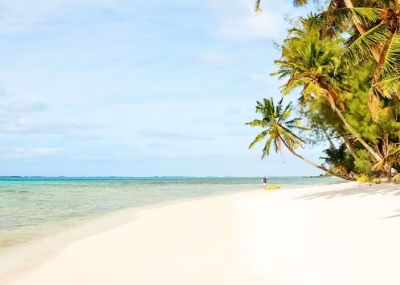
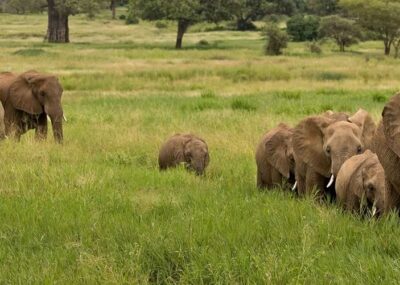
When most travelers dream of a safari in Tanzania, they immediately think of the Serengeti, the Great Migration, and the Ngorongoro Crater. While these iconic destinations are undoubtedly spectacular, Tanzania offers much more than its famous northern parks.
From the wildlife-rich plains of Northern Tanzania to the untamed wilderness of Southern Tanzania and the remote chimpanzee forests of Western Tanzania, each safari circuit offers a unique experience. Choosing the right safari region can significantly shape your journey, helping you find the perfect balance of wildlife, adventure, exclusivity, and comfort.
At Calabash Adventures, one of the most common questions we receive is: “Which safari circuit is best for me?” The answer depends entirely on your travel style, interests, and expectations.
This guide compares Tanzania’s three major safari circuits to help you choose the perfect adventure.
Northern Tanzania: The Classic Safari Experience
Northern Tanzania is the country’s most famous safari circuit and is often considered one of the best wildlife destinations in Africa. The region includes world-renowned parks such as Serengeti National Park, Ngorongoro Crater, Tarangire National Park, and Lake Manyara National Park.
This circuit offers exceptional wildlife viewing throughout the year and is home to the Great Wildebeest Migration, where more than two million wildebeest, zebras, and gazelles move across the Serengeti ecosystem in search of fresh grazing.
Travelers visiting Northern Tanzania enjoy excellent opportunities to see the Big Five—lion, leopard, elephant, rhino, and buffalo—as well as cheetahs, giraffes, hyenas, and hundreds of bird species.
Northern Tanzania also offers the widest range of accommodations, from budget lodges to world-class luxury camps.
Best For:
- First-time safari visitors
- Families
- Great Migration safaris
- Luxury travelers
- Big Five enthusiasts
Advantages:
✓ Outstanding wildlife density
✓ Easy road access between parks
✓ Excellent year-round safari opportunities
✓ Large variety of accommodations
Considerations:
- More popular during peak seasons
- Higher accommodation demand during migration periods
Southern Tanzania: Wild, Authentic and Uncrowded
For travelers seeking a more exclusive safari experience away from busy wildlife hotspots, Southern Tanzania is an excellent choice.
The Southern Circuit includes Nyerere National Park, Ruaha National Park, and Mikumi National Park. Together, these protected areas cover enormous wilderness landscapes that receive only a fraction of the visitors found in Northern Tanzania.
One of the biggest advantages of Southern Tanzania is the diversity of safari activities available. In addition to traditional game drives, visitors can enjoy boat safaris along the Rufiji River and guided walking safaris that allow guests to experience the African bush on foot.
Ruaha National Park is particularly famous for its large elephant population and impressive concentration of predators, while Nyerere National Park offers unique water-based wildlife experiences.
Best For:
- Returning safari travelers
- Honeymooners
- Nature enthusiasts
- Couples seeking privacy
- Travelers looking for fewer crowds
Advantages:
✓ Excellent walking safaris
✓ Unique boat safaris
✓ Less crowded parks
✓ Authentic wilderness experience
Considerations:
- Greater travel distances
- Some camps operate seasonally
Western Tanzania: Africa’s Last Great Wilderness
Western Tanzania remains one of Africa’s most remote and least-visited safari regions. It offers a completely different experience from both Northern and Southern Tanzania.
This circuit includes Mahale Mountains National Park, Katavi National Park, and Ugalla River National Park.
Mahale Mountains is internationally renowned for chimpanzee trekking. Visitors hike through lush forests along the shores of Lake Tanganyika to observe wild chimpanzees in their natural environment, creating one of Africa’s most extraordinary wildlife encounters.
Katavi National Park, meanwhile, is often described as one of the continent’s last true wilderness areas. During the dry season, vast concentrations of buffalo, hippos, crocodiles, and predators gather around shrinking water sources, producing incredible wildlife viewing with very few other visitors.
Best For:
- Adventure travelers
- Wildlife photographers
- Experienced safari-goers
- Chimpanzee enthusiasts
- Travelers seeking exclusivity
Advantages:
✓ Exceptional chimpanzee trekking
✓ Very few tourists
✓ Untouched wilderness
✓ Extraordinary photographic opportunities
Considerations:
- Fly-in access is often required
- Higher transportation costs
- Limited accommodation options
Tanzania Safari Circuits at a Glance
| Experience | Northern Tanzania | Southern Tanzania | Western Tanzania |
|---|---|---|---|
| Big Five Viewing | ★★★★★ | ★★★★☆ | ★★★☆☆ |
| Great Migration | ★★★★★ | ☆☆☆☆☆ | ☆☆☆☆☆ |
| Walking Safaris | ★★☆☆☆ | ★★★★★ | ★★★★☆ |
| Boat Safaris | ★☆☆☆☆ | ★★★★★ | ☆☆☆☆☆ |
| Chimpanzee Trekking | ☆☆☆☆☆ | ☆☆☆☆☆ | ★★★★★ |
| Family-Friendly | ★★★★★ | ★★★★☆ | ★★☆☆☆ |
| Tourist Crowds | ★★★★★ | ★★☆☆☆ | ★☆☆☆☆ |
| Exclusivity | ★★★☆☆ | ★★★★☆ | ★★★★★ |
Which Safari Circuit Matches Your Travel Style?
Choose Northern Tanzania If:
- This is your first safari in Africa
- Seeing the Great Migration is a priority
- You want the best chance of seeing the Big Five
- You are traveling with children
- You want a wide range of accommodation options
Choose Southern Tanzania If:
- You prefer fewer crowds
- You want a more immersive wilderness experience
- Walking safaris appeal to you
- You are planning a honeymoon
- You enjoy combining game drives and boat safaris
Choose Western Tanzania If:
- You want to see wild chimpanzees
- You have already visited East Africa before
- You are looking for remote destinations
- Photography is a major focus of your trip
- You value exclusivity above convenience
Why More Travelers Are Combining Circuits
One of the fastest-growing safari trends is combining multiple regions into a single itinerary.
Many travelers begin with the iconic wildlife experiences of Northern Tanzania before continuing to Western Tanzania for chimpanzee trekking or Southern Tanzania for a more remote wilderness adventure. Others finish their safari with a relaxing beach holiday in Zanzibar.
This approach provides a richer and more complete Tanzania experience while allowing visitors to explore different ecosystems, landscapes, and wildlife encounters in a single journey.
Why Choose Calabash Adventures?
At Calabash Adventures, we believe there is no one-size-fits-all safari. Every traveler is different, and the best safari is the one that matches your personal interests and expectations.
Our team has extensive experience throughout Tanzania’s Northern, Southern, and Western circuits. From tracking the Great Migration in the Serengeti and exploring the Ngorongoro Crater to arranging fly-in safaris to Katavi and Mahale Mountains, we help travelers discover the Tanzania that suits them best.
Whether you are planning your first safari, a luxury honeymoon, a family adventure, or a remote chimpanzee trekking expedition, our safari specialists can design a tailor-made itinerary that combines the perfect destinations, accommodations, and experiences.
Final Thoughts
Tanzania offers some of the most diverse safari experiences on the African continent.
Northern Tanzania delivers iconic wildlife and the legendary Great Migration. Southern Tanzania offers authentic wilderness, walking safaris, and fewer crowds. Western Tanzania provides extraordinary exclusivity and unforgettable chimpanzee encounters.
The real question is not whether Tanzania is worth visiting—it is which incredible corner of Tanzania you will explore first.
If you are unsure which safari circuit is right for you, contact Calabash Adventures and let our safari specialists help you design the perfect Tanzania safari.
Related Articles
Where Mahale Mountains National Park meets the Lake, and Chimpanzees Rule the Forest.
There are places in Africa that capture your imagination long before you arrive. Then there are places like Mahale Mountains National Park—destinations so remote, so beautiful, and so untouched that photographs barely do them justice.
Imagine standing on a deserted white-sand beach. Behind you, emerald-green mountains rise dramatically into the clouds. Before you stretch the endless blue expanse of Lake Tanganyika, one of the world’s oldest and deepest lakes. Somewhere in the dense rainforest above, a chimpanzee calls, its echo rolling across the forested slopes.
This is Mahale Mountains National Park, one of Africa’s most extraordinary wilderness destinations and arguably one of the most rewarding safari experiences in Tanzania.
Unlike the famous northern parks where safari vehicles gather around lions and elephants, Mahale offers something profoundly different. Here, there are no roads. No crowds. No traffic. No endless convoys of safari vehicles.
Instead, there are forest trails, hidden waterfalls, crystal-clear waters, and one of the largest protected populations of wild chimpanzees in Africa.
For travelers seeking authentic adventure, meaningful wildlife encounters, and complete immersion in nature, Mahale is quite simply unforgettable.
Where is Mahale Mountains National Park?
Mahale Mountains National Park lies on the eastern shores of Lake Tanganyika in western Tanzania, approximately 128 kilometers south of Kigoma.
Covering approximately 1,650 square kilometers, the park is bordered by the lake on one side and dramatic mountain ranges on the other. The highest peak, Mount Nkungwe, rises to over 2,400 meters above sea level.
Its isolation has helped preserve one of Africa’s most pristine ecosystems.
The absence of roads means access is only possible by:
- Light aircraft
- Boat transfers
- Occasionally by charter flights
While reaching Mahale requires more effort than visiting the Serengeti, most visitors agree that the journey is part of the magic.
The reward is a wilderness that remains largely unchanged from centuries ago.
Why Mahale is Different from Every Other Safari Destination
Many travelers arrive in Tanzania dreaming of seeing lions, elephants, and the Great Migration.
Mahale offers something entirely different.
Rather than viewing wildlife from a vehicle, visitors become part of the environment itself.
You walk through ancient forests.
You listen for chimpanzee calls.
You climb mountain trails.
You swim in freshwater lakes.
You travel by boat instead of a safari vehicle.
The experience feels less like a traditional safari and more like stepping into a nature documentary.
For many guests, Mahale becomes the highlight of their entire Tanzanian journey.
The Famous Chimpanzees of Mahale
The true stars of Mahale Mountains National Park are undoubtedly its chimpanzees. While Tanzania is celebrated worldwide for the Great Migration, the Big Five, and its vast savannahs, Mahale offers something entirely different—an intimate encounter with our closest living relatives in one of the most beautiful wilderness settings on Earth.
Mahale is home to an estimated 800 to 1,000 wild eastern chimpanzees, making it one of Africa’s most significant strongholds for chimpanzee conservation. These intelligent primates thrive within the park’s dense forests, protected mountain valleys, and riverine ecosystems. For decades, Mahale has attracted researchers, conservationists, wildlife photographers, and adventurous travelers eager to witness the fascinating lives of these remarkable animals.
The park’s most famous chimpanzee community is the Mimikire Group, a habituated troop of approximately 60 individuals that has been monitored and studied for generations. Through years of patient research and careful conservation management, these chimpanzees have become accustomed to the presence of humans without altering their natural behavior. This allows visitors a rare opportunity to observe authentic chimpanzee interactions in the wild—something few places on the planet can offer.
Every chimpanzee trek begins with anticipation. After an early breakfast, visitors set off with experienced guides and skilled trackers who know the forest intimately. The search often starts by following clues left behind during the previous day. Fresh nests high in the trees, partially eaten fruits scattered along the forest floor, distinctive footprints in the mud, and distant vocalizations all help trackers determine the troop’s location.
The trek itself is an adventure. Trails wind through lush rainforest, across clear mountain streams, and beneath towering mahogany and fig trees that have stood for centuries. Along the way, the forest reveals its own treasures—colorful butterflies, singing birds, and other primates moving through the canopy. Every sound heightens the excitement as visitors listen carefully for the unmistakable calls of chimpanzees echoing through the mountains.
Some days, the chimpanzees are found within an hour of entering the forest. On other occasions, they may have traveled deeper into the mountains, requiring a more challenging hike. Yet even the longer treks are rewarding, immersing visitors in one of Africa’s most pristine and untouched ecosystems.
Then comes the moment everyone has been waiting for.
A sudden rustle among the leaves.
A series of loud pant-hoots echoes through the forest.
Branches swaying high above.
A glimpse of black fur disappearing behind a tree trunk.
And then, almost magically, the chimpanzees appear.
For the next precious hour, visitors enter the world of these extraordinary primates. Mothers gently cradle newborn infants while keeping a watchful eye on older offspring. Curious juveniles swing effortlessly through the canopy, chasing one another in playful games that often seem strikingly human. Adult males display their strength by drumming on tree buttresses, while others engage in social grooming sessions that strengthen bonds within the group.
What makes the experience so moving is the realization of how similar chimpanzees are to us. Their facial expressions convey emotion. Their interactions reveal friendship, affection, curiosity, and even occasional conflict. You may witness a mother comforting her young, siblings playing together, or individuals sharing food and grooming each other. These moments offer a powerful reminder of our shared evolutionary heritage.
Many visitors are particularly captivated by the chimpanzees’ intelligence. They use tools, communicate through a variety of vocalizations, and maintain complex social relationships. Watching them interact often feels less like observing wildlife and more like being granted a glimpse into another society hidden within the forest.
The surrounding environment only adds to the magic of the encounter. Unlike many wildlife experiences that take place on open plains, chimpanzee trekking in Mahale unfolds within a spectacular rainforest setting where sunlight filters through the canopy, and the sounds of nature surround you from every direction. The experience feels immersive, personal, and profoundly authentic.
For many travelers, seeing chimpanzees in Mahale becomes the defining moment of their African adventure. It is not simply about checking an animal off a wildlife list; it is about experiencing a deep connection with nature and gaining a new appreciation for one of humanity’s closest relatives.
Long after visitors leave Mahale’s shores, they often find themselves remembering not just the chimpanzees they saw, but the emotions they felt while sitting quietly among them. The excitement of the search, the beauty of the forest, and the privilege of sharing space with these remarkable creatures combine to create an experience that remains etched in memory for a lifetime.
Quite simply, chimpanzee trekking in Mahale Mountains National Park is one of the most extraordinary wildlife encounters Africa has to offer—and one that few fortunate travelers will ever forget.
What Does Chimpanzee Trekking Feel Like?
People often ask how chimpanzee trekking compares to a traditional safari. The answer is surprisingly simple—it feels deeply personal.
Unlike watching wildlife from the comfort of a safari vehicle, chimpanzee trekking places you directly within the forest, walking the same trails these remarkable primates use every day. The experience begins with anticipation as you follow guides through an ancient rainforest, listening for distant calls and searching for signs of recent activity. Every rustling leaf and echoing pant-hoot heightens the excitement.
Then, suddenly, you find them.
The encounter is unlike anything most travelers have ever experienced. A mother gently cradles her infant. Young chimpanzees chase one another through the canopy with playful energy. Nearby, an adult male sits quietly, studying his surroundings—and perhaps even studying you.
What makes the experience so powerful is the connection. Their facial expressions are familiar. Their emotions seem recognizable. Their social bonds, playful behavior, and intelligence often mirror aspects of our own lives. You begin to see not just wildlife, but individuals with distinct personalities and relationships.
Many visitors describe their first chimpanzee encounter as one of the most emotional moments of their travels. It’s humbling, inspiring, and unforgettable. You don’t simply observe wildlife in Mahale—you feel connected to it, becoming part of a rare and extraordinary moment in nature.
Wildlife Beyond the Chimpanzees
Although chimpanzees are the main attraction, Mahale hosts a remarkable diversity of wildlife.
Visitors may encounter:
Primates
- Red colobus monkeys
- Blue monkeys
- Vervet monkeys
- Red-tailed monkeys
- Yellow baboons
Mammals
- Bushpigs
- Warthogs
- Bushbucks
- Duikers
- Leopards
- Civets
- Genets
Lake Wildlife
- Hippos
- Otters
- Hundreds of fish species
The park’s remoteness means wildlife behaves naturally, often showing little concern for human presence.
Birdwatching in Mahale
Mahale is a paradise for bird lovers.
More than 350 bird species have been recorded.
Highlights include:
- African Fish Eagle
- Palm-nut Vulture
- Livingstone’s Turaco
- Giant Kingfisher
- Ross’s Turaco
- African Broadbill
- Narina Trogon
Whether you’re an experienced birder or simply enjoy nature, the park offers exceptional birdwatching opportunities throughout the year.
The Wonders of Lake Tanganyika
Lake Tanganyika deserves recognition as an attraction in its own right.
Stretching over 670 kilometers, it is:
- Africa’s longest freshwater lake
- The world’s second-deepest lake
- One of the oldest lakes on Earth
Its waters are astonishingly clear.
Visibility often exceeds 20 meters.
Guests can enjoy:
- Swimming
- Snorkeling
- Kayaking
- Fishing
- Sunset cruises
- Boat excursions
The colorful cichlid fish found here are famous among aquatic enthusiasts and many species exist nowhere else on the planet.
Hidden Waterfalls and Forest Walks
Beyond chimpanzee trekking, Mahale offers beautiful guided walks.
One of the most popular excursions is a hike to hidden waterfalls deep within the forest.
Along the way, visitors encounter:
- Giant mahogany trees
- Forest streams
- Butterflies
- Birdlife
- Monkey troops
The cool pools beneath the waterfalls provide a refreshing reward after the hike.
Cultural Experiences Around Mahale
The area surrounding Mahale is home to the Tongwe people, who have lived alongside these forests for generations.
Community visits offer valuable insight into:
- Traditional lifestyles
- Fishing culture
- Local crafts
- Music and dance
- Indigenous knowledge of the forest
These experiences help visitors understand the relationship between local communities and conservation.
Day Trips to Mahale Mountains National Park
Many travelers believe Mahale can only be visited as a multi-day safari.
While longer stays are highly recommended, day trips are possible from Kigoma.
A typical day trip includes:
- Early morning boat transfer
- Guided chimpanzee trek
- Beach relaxation
- Picnic lunch
- Return boat journey
While a day trip provides a taste of Mahale’s magic, spending at least two or three nights allows for a far richer experience.
What to Expect on a Mahale Safari
Visitors should prepare for a safari unlike any other.
Expect:
✓ Walking instead of driving
✓ Moderate hiking
✓ Boat transportation
✓ Warm tropical temperatures
✓ High humidity
✓ Remote wilderness
✓ Extraordinary wildlife encounters
✓ Limited internet access
✓ Complete disconnection from everyday life
This is not a luxury city break.
It is a genuine wilderness experience.
Best Time to Visit Mahale Mountains National Park
Dry Season (June – October)
This is generally considered the best time.
Advantages include:
- Easier chimpanzee trekking
- Shorter hikes
- Comfortable weather
- Excellent lake visibility
Green Season (November – May)
Benefits include:
- Lush scenery
- Fewer visitors
- Beautiful photography
- Excellent birdwatching
Chimpanzees may range higher into the mountains during wetter months, resulting in longer treks.
Accommodation in Mahale
Accommodation remains intentionally limited, helping preserve the wilderness atmosphere.
Options range from luxury lodges to simple camps.
Visitors can expect:
- Beachfront settings
- Stunning lake views
- Fresh local cuisine
- Personalized service
- Eco-friendly operations
The limited number of rooms creates an exclusive atmosphere rarely found elsewhere in Africa.
Mahale Safari Price Guide
Safari prices vary depending on season, accommodation level, and transport arrangements.
| Safari Type | Approximate Cost Per Person |
| Day Trip from Kigoma | USD 250–500 |
| 2-Day Budget Safari | USD 700–1,200 |
| 3-Day Mid-Range Safari | USD 1,500–2,500 |
| 4-Day Luxury Safari | USD 3,000–5,500 |
| Fly-in Luxury Experience | USD 4,500–8,000+ |
Prices generally include:
- Park fees
- Chimpanzee permits
- Accommodation
- Meals
- Guiding services
- Boat transfers
Flights are usually priced separately.
Why Mahale is Worth the Cost
Many travelers initially compare Mahale to traditional safari destinations and wonder why prices are higher.
The answer lies in its remoteness.
Everything—from fuel and food to construction materials—must be transported by boat or aircraft.
The result is an exclusive experience with:
- Very few visitors
- Exceptional guiding
- Intimate wildlife encounters
- Pristine wilderness
Few destinations in Africa offer this level of exclusivity.
Sustainable Tourism and Conservation
Every visitor to Mahale contributes directly to conservation.
Tourism revenue supports:
- Chimpanzee research
- Anti-poaching efforts
- Habitat protection
- Community development
- Environmental education
Responsible tourism helps ensure future generations can experience Mahale’s wonders.
Frequently Asked Questions About Mahale Mountains National Park
Is chimpanzee viewing guaranteed?
Chimpanzees are wild animals, so sightings cannot be guaranteed. However, success rates are extremely high, often exceeding 90%.
How difficult is chimpanzee trekking?
Moderate fitness is recommended. Trek durations range from one to six hours, depending on the chimpanzee location.
Can children visit Mahale?
Children are welcome, but chimpanzee trekking generally has age restrictions. Consult your safari operator for current regulations.
Is swimming safe in Lake Tanganyika?
Yes. Swimming is generally safe in designated areas around lodges and camps.
How many nights should I spend in Mahale?
Three to four nights is ideal. This allows multiple chimpanzee treks and time to enjoy the lake.
Can Mahale be combined with other parks?
Absolutely. Mahale combines beautifully with:
- Katavi
- Ruaha
- Nyerere
- Serengeti
- Zanzibar
Is Mahale crowded?
Not at all. It remains one of Tanzania’s least-visited national parks.
Are there roads in Mahale?
No. Movement is primarily on foot or by boat.
Why Book Mahale with Calabash Adventures?
A journey to Mahale requires careful planning, local expertise, and seamless logistics.
At Calabash Adventures, we handle every detail—from domestic flights and boat transfers to accommodations and expert guiding—allowing you to focus entirely on the experience.
Whether you’re seeking a luxury fly-in safari, a chimpanzee-focused adventure, or a combined western Tanzania expedition including Katavi and Mahale, our team creates tailor-made journeys designed around your interests.
Our local knowledge ensures you spend less time worrying about logistics and more time immersed in one of Africa’s last great wildernesses.
Start Planning Your Mahale Adventure Today
There are a few places left in the world where nature still feels truly wild.
Mahale Mountains National Park is one of them.
Here, chimpanzees roam ancient forests, mountains plunge into crystal-clear waters, and every day brings discoveries that cannot be scripted. It is a place that slows you down, reconnects you with nature, and leaves you with stories that will be told for years to come.
If you’re ready to experience Tanzania beyond the ordinary safari circuit, let Calabash Adventures help you discover the magic of Mahale Mountains National Park—one of Africa’s most extraordinary hidden treasures. Contact us today and begin planning the journey of a lifetime.
Related Articles
Sustainable Tourism: Lake Tanganyika, one of the largest and oldest freshwater lakes in the world, is facing growing environmental pressures. Overfishing, unsustainable agricultural practices along the rivers feeding into the lake, and rising water levels threaten both the ecosystem and the livelihoods of local communities. However, tourism presents a sustainable solution that not only promotes conservation but also offers economic alternatives to fishing and agriculture, ensuring the long-term health of this vital resource.
The Impact of Overfishing on Lake Tanganyika
Overfishing has long been a significant issue for Lake Tanganyika. The lake is home to unique fish species that are vital to both the local economy and biodiversity. However, the demand for fish has led to unsustainable fishing practices, depleting fish stocks, and threatening aquatic ecosystems. As the fish populations decline, local fishermen struggle to make a living, perpetuating a cycle of poverty and environmental degradation.
How Tourism Can Replace Overfishing
By shifting the focus from fishing to tourism, we can offer local communities a more sustainable and profitable alternative. Lake Tanganyika is home to stunning wildlife, crystal-clear waters, and breathtaking landscapes that draw travelers from around the world. Eco-tourism focused on wildlife safaris, boat tours, bird watching, and cultural experiences can generate substantial income for local communities, creating jobs and supporting small businesses, such as local guides, accommodation providers, and artisans.
Instead of relying on fish stocks, which are rapidly diminishing, tourism provides a long-term and renewable source of revenue. The more tourists flock to the lake to witness its natural beauty, the greater the incentive for the community to protect the environment, including the lake’s aquatic life. With the right promotional efforts, sustainable tourism can not only replace the need for overfishing but also raise awareness of the importance of conservation.
The Role of National Parks and Protected Areas
The surrounding national parks and ecosystems are vital to maintaining the balance of Lake Tanganyika’s environment. These protected areas not only conserve biodiversity but also offer tourists unparalleled opportunities to witness Africa’s wildlife in its natural habitat, providing additional sources of income for the local community.
- Gombe National Park:
Located on the shores of Lake Tanganyika, Gombe is home to one of the most famous chimpanzee populations in the world. The park’s chimpanzees attract eco-tourists and researchers, offering both scientific value and an unforgettable experience for visitors. Promoting tourism in Gombe supports the protection of chimpanzee habitats and helps fund conservation efforts aimed at preserving these endangered primates. - Mahale National Park & the Great Mahale Ecosystem:
Mahale National Park is one of Africa’s most remote and pristine parks. Known for its stunning landscapes and diverse wildlife, Mahale is home to a thriving population of chimpanzees and offers one of the best opportunities for chimpanzee trekking in Africa. Its protected ecosystem plays a critical role in maintaining the health of the lake’s environment. Tourism here can help mitigate the pressures of local overfishing and promote sustainable practices among surrounding communities. - Katavi National Park:
Katavi, one of Tanzania’s least explored parks, is a wildlife haven that is increasingly attracting adventurers seeking untouched wilderness. The park is home to large herds of elephants, lions, and diverse bird species. Promoting tourism in Katavi offers the dual benefit of generating income while providing an alternative to destructive practices like overfishing. The park’s natural beauty and wildlife make it a key asset for sustainable tourism development. - Issa Valley:
Issa Valley, an important area for wildlife conservation and research, is an ecologically significant region along the shores of Lake Tanganyika. Its biodiversity is crucial for maintaining the health of the entire lake ecosystem. By promoting tourism here, we not only protect the area’s rich wildlife but also raise awareness about the need to protect water sources feeding into the lake.
The Importance of Promoting Sustainable Tourism
To shift the mindset of local communities from overfishing to tourism, effective promotion and education are key. This involves highlighting the economic and environmental benefits of eco-tourism, as well as demonstrating how preserving the lake’s ecosystems directly contributes to their livelihoods.
- Economic Incentives for Local Communities:
Promote the value of the lake’s biodiversity as a long-term resource.
Showcase success stories where communities have benefited from eco-tourism rather than overfishing. - Conservation Education:
Educate locals about the importance of protecting the lake’s ecosystem and the impact of sustainable practices.
Encourage them to participate in conservation efforts such as sustainable fishing, wildlife protection, and waste management.
Addressing Agricultural Practices and Water Level Rise
Agriculture along the river valleys that feed into Lake Tanganyika has also contributed to environmental challenges. Unsustainable farming practices, including deforestation and the use of harmful fertilizers, have led to soil erosion and increased nutrient runoff into the lake. This runoff has contributed to rising water levels and the degradation of water quality, further endangering the aquatic life that sustains both the local population and the tourism industry.
To mitigate these challenges, it is essential to shift agricultural practices away from environmentally harmful techniques. This can be achieved by:
Promoting Sustainable Agriculture:
Encourage agroforestry and other soil conservation practices to reduce erosion and improve water quality.
Provide training and resources to farmers on sustainable techniques that reduce the environmental impact.
Incentivizing Land Use Changes:
Introduce alternative livelihoods, such as organic farming, that protect the watershed areas.
Promote eco-tourism ventures that utilize agricultural land sustainably, such as farming tours or organic produce markets, which can generate additional income for the community.
Future of Lake Tanganyika
By prioritizing the promotion of tourism and sustainable agricultural practices, we can protect Lake Tanganyika’s fragile ecosystem while ensuring that local communities thrive. Tourism has the potential to be a powerful tool in moving people’s minds away from harmful practices like overfishing and unsustainable agriculture, toward more eco-conscious and economically rewarding alternatives.
Now is the time to embrace sustainable practices that balance human livelihoods with environmental preservation. Through a concerted effort to promote tourism, we can ensure that Lake Tanganyika remains a vibrant and life-sustaining ecosystem for future generations.
Related Articles