
Discover the Magic of Mahale Mountains National Park
July 21, 2025

Plan your Holiday in Tanzania with peace of mind

Professional service from trusted local experts

We are proud of our service quality and great reviews

You have our support 24/7 during your tour
There are places in Africa that capture your imagination long before you arrive. Then there are places like Mahale Mountains National Park—destinations so remote, so beautiful, and so untouched that photographs barely do them justice.
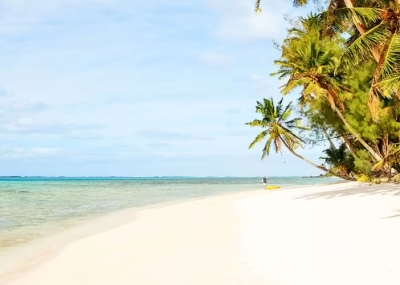
Imagine standing on a deserted white-sand beach. Behind you, emerald-green mountains rise dramatically into the clouds. Before you stretch the endless blue expanse of Lake Tanganyika, one of the world’s oldest and deepest lakes. Somewhere in the dense rainforest above, a chimpanzee calls, its echo rolling across the forested slopes.
This is Mahale Mountains National Park, one of Africa’s most extraordinary wilderness destinations and arguably one of the most rewarding safari experiences in Tanzania.
Unlike the famous northern parks where safari vehicles gather around lions and elephants, Mahale offers something profoundly different. Here, there are no roads. No crowds. No traffic. No endless convoys of safari vehicles.
Instead, there are forest trails, hidden waterfalls, crystal-clear waters, and one of the largest protected populations of wild chimpanzees in Africa.
For travelers seeking authentic adventure, meaningful wildlife encounters, and complete immersion in nature, Mahale is quite simply unforgettable.
Mahale Mountains National Park lies on the eastern shores of Lake Tanganyika in western Tanzania, approximately 128 kilometers south of Kigoma.
Covering approximately 1,650 square kilometers, the park is bordered by the lake on one side and dramatic mountain ranges on the other. The highest peak, Mount Nkungwe, rises to over 2,400 meters above sea level.
Its isolation has helped preserve one of Africa’s most pristine ecosystems.
The absence of roads means access is only possible by:
While reaching Mahale requires more effort than visiting the Serengeti, most visitors agree that the journey is part of the magic.
The reward is a wilderness that remains largely unchanged from centuries ago.
Many travelers arrive in Tanzania dreaming of seeing lions, elephants, and the Great Migration.
Mahale offers something entirely different.
Rather than viewing wildlife from a vehicle, visitors become part of the environment itself.
You walk through ancient forests.
You listen for chimpanzee calls.
You climb mountain trails.
You swim in freshwater lakes.
You travel by boat instead of a safari vehicle.
The experience feels less like a traditional safari and more like stepping into a nature documentary.
For many guests, Mahale becomes the highlight of their entire Tanzanian journey.
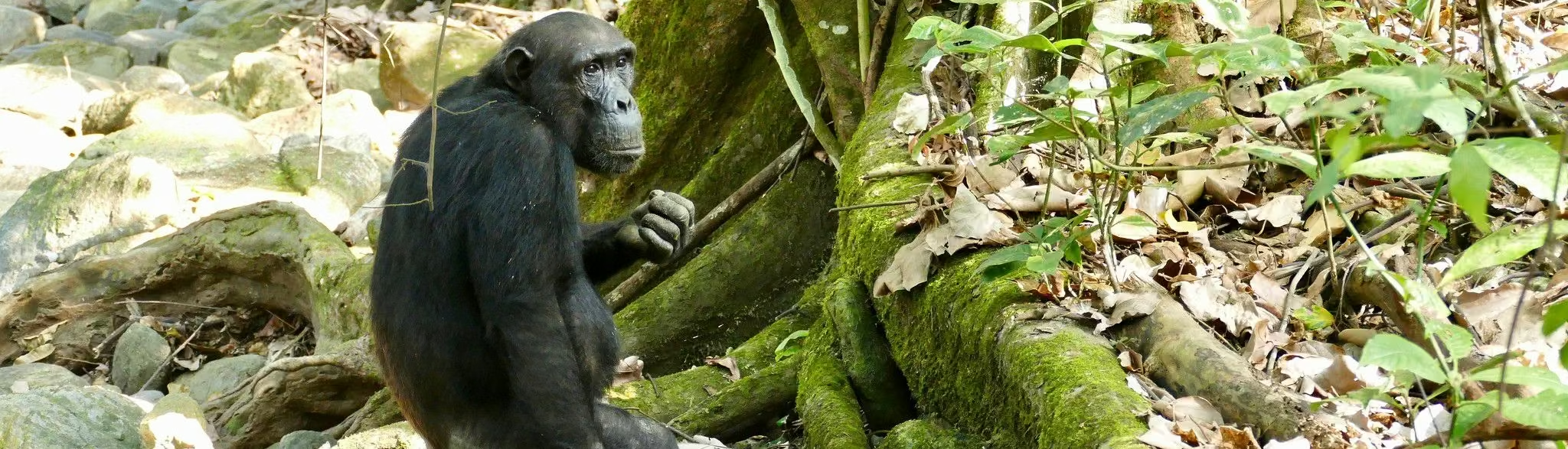
The true stars of Mahale Mountains National Park are undoubtedly its chimpanzees. While Tanzania is celebrated worldwide for the Great Migration, the Big Five, and its vast savannahs, Mahale offers something entirely different—an intimate encounter with our closest living relatives in one of the most beautiful wilderness settings on Earth.
Mahale is home to an estimated 800 to 1,000 wild eastern chimpanzees, making it one of Africa’s most significant strongholds for chimpanzee conservation. These intelligent primates thrive within the park’s dense forests, protected mountain valleys, and riverine ecosystems. For decades, Mahale has attracted researchers, conservationists, wildlife photographers, and adventurous travelers eager to witness the fascinating lives of these remarkable animals.
The park’s most famous chimpanzee community is the Mimikire Group, a habituated troop of approximately 60 individuals that has been monitored and studied for generations. Through years of patient research and careful conservation management, these chimpanzees have become accustomed to the presence of humans without altering their natural behavior. This allows visitors a rare opportunity to observe authentic chimpanzee interactions in the wild—something few places on the planet can offer.
Every chimpanzee trek begins with anticipation. After an early breakfast, visitors set off with experienced guides and skilled trackers who know the forest intimately. The search often starts by following clues left behind during the previous day. Fresh nests high in the trees, partially eaten fruits scattered along the forest floor, distinctive footprints in the mud, and distant vocalizations all help trackers determine the troop’s location.
The trek itself is an adventure. Trails wind through lush rainforest, across clear mountain streams, and beneath towering mahogany and fig trees that have stood for centuries. Along the way, the forest reveals its own treasures—colorful butterflies, singing birds, and other primates moving through the canopy. Every sound heightens the excitement as visitors listen carefully for the unmistakable calls of chimpanzees echoing through the mountains.
Some days, the chimpanzees are found within an hour of entering the forest. On other occasions, they may have traveled deeper into the mountains, requiring a more challenging hike. Yet even the longer treks are rewarding, immersing visitors in one of Africa’s most pristine and untouched ecosystems.
Then comes the moment everyone has been waiting for.
A sudden rustle among the leaves.
A series of loud pant-hoots echoes through the forest.
Branches swaying high above.
A glimpse of black fur disappearing behind a tree trunk.
And then, almost magically, the chimpanzees appear.
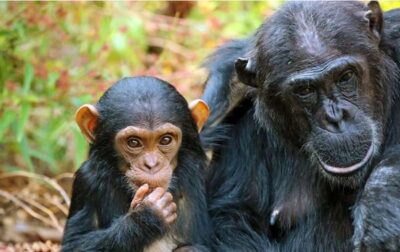
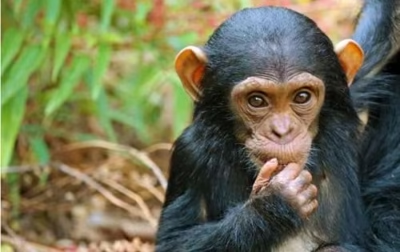
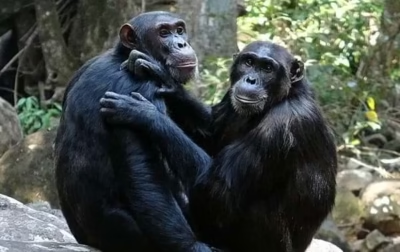
For the next precious hour, visitors enter the world of these extraordinary primates. Mothers gently cradle newborn infants while keeping a watchful eye on older offspring. Curious juveniles swing effortlessly through the canopy, chasing one another in playful games that often seem strikingly human. Adult males display their strength by drumming on tree buttresses, while others engage in social grooming sessions that strengthen bonds within the group.
What makes the experience so moving is the realization of how similar chimpanzees are to us. Their facial expressions convey emotion. Their interactions reveal friendship, affection, curiosity, and even occasional conflict. You may witness a mother comforting her young, siblings playing together, or individuals sharing food and grooming each other. These moments offer a powerful reminder of our shared evolutionary heritage.
Many visitors are particularly captivated by the chimpanzees’ intelligence. They use tools, communicate through a variety of vocalizations, and maintain complex social relationships. Watching them interact often feels less like observing wildlife and more like being granted a glimpse into another society hidden within the forest.
The surrounding environment only adds to the magic of the encounter. Unlike many wildlife experiences that take place on open plains, chimpanzee trekking in Mahale unfolds within a spectacular rainforest setting where sunlight filters through the canopy, and the sounds of nature surround you from every direction. The experience feels immersive, personal, and profoundly authentic.
For many travelers, seeing chimpanzees in Mahale becomes the defining moment of their African adventure. It is not simply about checking an animal off a wildlife list; it is about experiencing a deep connection with nature and gaining a new appreciation for one of humanity’s closest relatives.
Long after visitors leave Mahale’s shores, they often find themselves remembering not just the chimpanzees they saw, but the emotions they felt while sitting quietly among them. The excitement of the search, the beauty of the forest, and the privilege of sharing space with these remarkable creatures combine to create an experience that remains etched in memory for a lifetime.
Quite simply, chimpanzee trekking in Mahale Mountains National Park is one of the most extraordinary wildlife encounters Africa has to offer—and one that few fortunate travelers will ever forget.
People often ask how chimpanzee trekking compares to a traditional safari. The answer is surprisingly simple—it feels deeply personal.
Unlike watching wildlife from the comfort of a safari vehicle, chimpanzee trekking places you directly within the forest, walking the same trails these remarkable primates use every day. The experience begins with anticipation as you follow guides through an ancient rainforest, listening for distant calls and searching for signs of recent activity. Every rustling leaf and echoing pant-hoot heightens the excitement.
Then, suddenly, you find them.
The encounter is unlike anything most travelers have ever experienced. A mother gently cradles her infant. Young chimpanzees chase one another through the canopy with playful energy. Nearby, an adult male sits quietly, studying his surroundings—and perhaps even studying you.
What makes the experience so powerful is the connection. Their facial expressions are familiar. Their emotions seem recognizable. Their social bonds, playful behavior, and intelligence often mirror aspects of our own lives. You begin to see not just wildlife, but individuals with distinct personalities and relationships.
Many visitors describe their first chimpanzee encounter as one of the most emotional moments of their travels. It’s humbling, inspiring, and unforgettable. You don’t simply observe wildlife in Mahale—you feel connected to it, becoming part of a rare and extraordinary moment in nature.
Although chimpanzees are the main attraction, Mahale hosts a remarkable diversity of wildlife.
Visitors may encounter:
The park’s remoteness means wildlife behaves naturally, often showing little concern for human presence.
Mahale is a paradise for bird lovers.
More than 350 bird species have been recorded.
Highlights include:
Whether you’re an experienced birder or simply enjoy nature, the park offers exceptional birdwatching opportunities throughout the year.
Lake Tanganyika deserves recognition as an attraction in its own right.
Stretching over 670 kilometers, it is:
Its waters are astonishingly clear.
Visibility often exceeds 20 meters.
Guests can enjoy:
The colorful cichlid fish found here are famous among aquatic enthusiasts and many species exist nowhere else on the planet.
Beyond chimpanzee trekking, Mahale offers beautiful guided walks.
One of the most popular excursions is a hike to hidden waterfalls deep within the forest.
Along the way, visitors encounter:
The cool pools beneath the waterfalls provide a refreshing reward after the hike.
The area surrounding Mahale is home to the Tongwe people, who have lived alongside these forests for generations.
Community visits offer valuable insight into:
These experiences help visitors understand the relationship between local communities and conservation.
Many travelers believe Mahale can only be visited as a multi-day safari.
While longer stays are highly recommended, day trips are possible from Kigoma.
A typical day trip includes:
While a day trip provides a taste of Mahale’s magic, spending at least two or three nights allows for a far richer experience.
Visitors should prepare for a safari unlike any other.
Expect:
✓ Walking instead of driving
✓ Moderate hiking
✓ Boat transportation
✓ Warm tropical temperatures
✓ High humidity
✓ Remote wilderness
✓ Extraordinary wildlife encounters
✓ Limited internet access
✓ Complete disconnection from everyday life
This is not a luxury city break.
It is a genuine wilderness experience.
This is generally considered the best time.
Advantages include:
Benefits include:
Chimpanzees may range higher into the mountains during wetter months, resulting in longer treks.
Accommodation remains intentionally limited, helping preserve the wilderness atmosphere.
Options range from luxury lodges to simple camps.
Visitors can expect:
The limited number of rooms creates an exclusive atmosphere rarely found elsewhere in Africa.
Safari prices vary depending on season, accommodation level, and transport arrangements.
| Safari Type | Approximate Cost Per Person |
| Day Trip from Kigoma | USD 250–500 |
| 2-Day Budget Safari | USD 700–1,200 |
| 3-Day Mid-Range Safari | USD 1,500–2,500 |
| 4-Day Luxury Safari | USD 3,000–5,500 |
| Fly-in Luxury Experience | USD 4,500–8,000+ |
Prices generally include:
Flights are usually priced separately.
Many travelers initially compare Mahale to traditional safari destinations and wonder why prices are higher.
The answer lies in its remoteness.
Everything—from fuel and food to construction materials—must be transported by boat or aircraft.
The result is an exclusive experience with:
Few destinations in Africa offer this level of exclusivity.
Every visitor to Mahale contributes directly to conservation.
Tourism revenue supports:
Responsible tourism helps ensure future generations can experience Mahale’s wonders.
Chimpanzees are wild animals, so sightings cannot be guaranteed. However, success rates are extremely high, often exceeding 90%.
Moderate fitness is recommended. Trek durations range from one to six hours, depending on the chimpanzee location.
Children are welcome, but chimpanzee trekking generally has age restrictions. Consult your safari operator for current regulations.
Yes. Swimming is generally safe in designated areas around lodges and camps.
Three to four nights is ideal. This allows multiple chimpanzee treks and time to enjoy the lake.
Absolutely. Mahale combines beautifully with:
Not at all. It remains one of Tanzania’s least-visited national parks.
No. Movement is primarily on foot or by boat.
A journey to Mahale requires careful planning, local expertise, and seamless logistics.
At Calabash Adventures, we handle every detail—from domestic flights and boat transfers to accommodations and expert guiding—allowing you to focus entirely on the experience.
Whether you’re seeking a luxury fly-in safari, a chimpanzee-focused adventure, or a combined western Tanzania expedition including Katavi and Mahale, our team creates tailor-made journeys designed around your interests.
Our local knowledge ensures you spend less time worrying about logistics and more time immersed in one of Africa’s last great wildernesses.
There are a few places left in the world where nature still feels truly wild.
Mahale Mountains National Park is one of them.
Here, chimpanzees roam ancient forests, mountains plunge into crystal-clear waters, and every day brings discoveries that cannot be scripted. It is a place that slows you down, reconnects you with nature, and leaves you with stories that will be told for years to come.
If you’re ready to experience Tanzania beyond the ordinary safari circuit, let Calabash Adventures help you discover the magic of Mahale Mountains National Park—one of Africa’s most extraordinary hidden treasures. Contact us today and begin planning the journey of a lifetime.

Book Now & Save Big 2026

*View Available Safari Deals.