
Guide to the Serengeti Great Migration
April 23, 2025

Plan your Holiday in Tanzania with peace of mind

Professional service from trusted local experts

We are proud of our service quality and great reviews

You have our support 24/7 during your tour

Serengeti Great Migration: Each year, the vast plains of Northern Tanzania transform into a living river of life during one of the world’s most extraordinary natural events—the Serengeti Great Migration. Over 1.5 million wildebeest, joined by hundreds of thousands of zebras and gazelles, move in a timeless cycle across the Serengeti ecosystem in search of fresh grazing and water. It is not just movement; it is survival, instinct, and harmony unfolding on a scale that feels almost otherworldly.
To stand before this migration is to witness nature at its most honest and powerful. Thunderous hooves shake the earth, dust rises like smoke on the horizon, and predators silently follow the flow of life. Lions, crocodiles, and cheetahs become part of this dramatic story, creating moments of tension and beauty that stay with you forever. Every river crossing, every stampede, and every quiet sunrise over the plains feels like a scene from a living documentary.
If you are dreaming of experiencing the Great Migration in Tanzania, timing and location are everything. From the southern calving season to the dramatic Mara River crossings, each stage offers something unique. This guide will help you plan the perfect journey and discover why this natural wonder belongs at the very top of your travel bucket list.
The Serengeti Great Migration is the continuous, clockwise journey of herbivores across the vast Serengeti–Mara ecosystem, driven by seasonal rainfall and the constant search for fresh, nutrient-rich grazing land. Each year, over 1.5 million wildebeest, accompanied by hundreds of thousands of zebras and gazelles, trace an ancient path that stretches roughly 1,800 miles between Tanzania’s Serengeti National Park and Kenya’s Maasai Mara, before returning south again in an endless cycle of life.
This is nature in motion at its most powerful and unfiltered. The migration is not a straight journey, but a series of dramatic chapters shaped by survival. Herds gather in enormous, shifting clouds across the plains, guided by instinct and the promise of rain-fed grasslands. Along the way, they encounter some of the most formidable challenges on earth—relentless predators such as lions, cheetahs, hyenas, and crocodiles, as well as the physical strain of long-distance travel under harsh sun and open skies.
The river crossings are among the most iconic moments, where survival hangs in the balance within seconds. Yet beyond the drama, the migration is also a story of resilience, renewal, and balance—an ancient rhythm that has shaped the Serengeti for thousands of years and continues to define one of the greatest wildlife spectacles on the planet.
This is nature in motion at its most powerful and unfiltered. The migration is not a straight journey, but a series of dramatic chapters shaped by survival. Herds gather in enormous, shifting clouds across the plains, guided by instinct and the promise of rain-fed grasslands. Along the way, they encounter some of the most formidable challenges on earth—relentless predators such as lions, cheetahs, hyenas, and crocodiles, as well as the physical strain of long-distance travel under harsh sun and open skies.
The experience is not just about watching animals move—it is about witnessing an ancient system of life that continues without interruption. Every moment feels alive with uncertainty and energy, where nature writes its own story in real time.
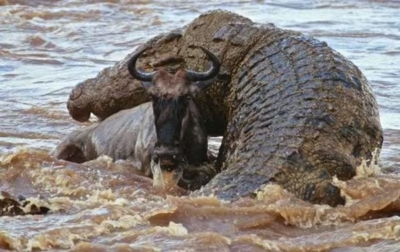
The river crossings are among the most iconic moments of the Serengeti Great Migration, where survival hangs in the balance within seconds. Wildebeest gather at the edge of the water, hesitating before plunging into fast-moving currents filled with danger. Crocodiles lie in wait beneath the surface, while pressure builds from thousands of animals pushing from behind.
Yet beyond the drama, the migration is also a story of resilience, renewal, and balance—an ancient rhythm that has shaped the Serengeti for thousands of years and continues to define one of the greatest wildlife spectacles on the planet.
 Serengeti Migration Map
To truly experience the magic of the Serengeti Great Migration, timing is everything—but location is what transforms the experience from memorable into unforgettable. Because the herds are constantly on the move across the Serengeti–Mara ecosystem, each month reveals a completely different landscape, mood, and level of drama. Knowing where to be allows you to witness everything from peaceful calving scenes to intense river crossings where survival is decided in seconds.
This is one of the most emotionally powerful phases of the entire Serengeti Great Migration. The southern plains of Ndutu, bordering the Ngorongoro Conservation Area, become a vast nursery where hundreds of thousands of wildebeest calves are born within a very short window.
The landscape is lush, green, and open—perfect for spotting wildlife during the Serengeti migration in Ndutu. Newborn calves take their first steps within minutes of birth, learning quickly to stand, run, and stay close to the herd. This abundance of vulnerable young life naturally attracts predators, making Ndutu one of the best places in Africa to witness raw predator–prey interactions during the Serengeti Great Migration calving season.
Lions stalk quietly through the grass, cheetahs scan the open plains for opportunities, and hyenas follow closely behind the herds. Despite the tension, there is also an incredible sense of renewal—this is the beginning of life on the plains, and it is both beautiful and dramatic.
For photographers, Ndutu during the Serengeti Great Migration offers soft light, open visibility, and constant action, making it one of the most rewarding safari periods in Tanzania.
As the long rains taper off and the southern plains begin to dry, the herds gradually move northward through the heart of the Serengeti Great Migration route—Seronera. This central Serengeti region acts as a natural corridor, where millions of animals funnel through in search of greener pastures.
This is a quieter, more reflective phase of the Serengeti Great Migration. The landscape turns a deep green, dotted with acacia trees and rocky kopjes that provide shelter for predators and panoramic viewing points for visitors.
Seronera is famous for its resident wildlife populations, meaning even outside the peak movement of the Serengeti Great Migration, game viewing remains exceptional. During this period, visitors often enjoy fewer crowds compared to peak river-crossing season, allowing for more intimate safari experiences.
Leopards draped over tree branches, lion prides resting on granite outcrops, and large herds moving slowly across golden-green plains create a balanced rhythm of action and calm. It is a perfect time for travellers who want both Serengeti Great Migration movement and classic Serengeti scenery without the intensity of peak season pressure.
This is the stage most people dream about in the Serengeti Great Migration—the dramatic Mara River crossings in the northern Serengeti. As the herds gather in Kogatende and Lamai, tension builds along the riverbanks. Wildebeest hesitate, circle, and gather strength before committing to one of the most dangerous moments of their lives during the Serengeti Great Migration river crossing season.
Then suddenly, chaos erupts. Thousands of animals plunge into the fast-moving waters, battling strong currents and avoiding massive Nile crocodiles waiting below the surface. Dust, noise, and movement fill the air in a breathtaking display of survival instinct unique to the Serengeti Great Migration.
No two crossings are ever the same. Some are quick and successful, while others are chaotic and unpredictable, making this one of the most emotionally charged wildlife experiences on Earth.
Luxury camps in this northern Serengeti Great Migration zone offer front-row access to these events, allowing visitors to follow the herds daily and witness crossings as they unfold in real time. This is peak Serengeti Great Migration season and arguably the most iconic safari experience in Tanzania.
As the dry season continues, the herds spread out between the northern Serengeti Great Migration corridor and Kenya’s Maasai Mara. Some groups remain in Tanzania’s Lamai region, while others cross the border in search of fresh grazing.
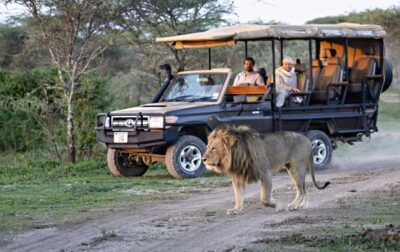
This period offers a slightly more relaxed but still highly rewarding Serengeti Great Migration safari experience. The landscapes are golden and dramatic, with long visibility and frequent predator encounters. Lions, leopards, and hyenas take advantage of the concentrated herds, creating consistent wildlife action during this stage of the Serengeti Great Migration.
It is also an excellent time for travellers seeking luxury and exclusivity, as many high-end camps operate in remote, scenic locations with uninterrupted views of the Serengeti Great Migration corridors.
With the arrival of the short rains, the herds begin their long journey south once again, returning to the fertile plains of Ndutu. This marks the closing of the Serengeti Great Migration cycle, though in reality, it is simply the beginning of another continuous loop.
Unlike the dramatic river crossings, this phase of the Serengeti Great Migration is quieter and more peaceful. The herds move in long, steady lines across open plains, guided by instinct and rainfall patterns. The landscapes slowly turn green again, preparing for the next calving season.
For visitors, this is a beautiful time to witness the Serengeti Great Migration in a more relaxed state—fewer crowds, softer light, and vast herds stretching to the horizon. It is a reminder that the Serengeti Great Migration is not a single event, but an endless, living circle of life.

The Serengeti Migration calendar is an essential planning tool for travelers, safari planners, and wildlife photographers aiming to experience the Serengeti Great Migration at its most dramatic and rewarding moments. Although the exact timing shifts slightly each year due to rainfall patterns, the overall movement of the herds across the Serengeti–Mara ecosystem remains remarkably consistent. This predictability allows visitors to plan with confidence while still embracing the wild unpredictability that defines the Serengeti National Park experience.
If your primary goal is to witness the iconic Mara River wildebeest crossings in the northern Serengeti, the best period is typically from July to October. During this time, massive herds concentrate in areas such as Kogatende and Lamai before attempting the dangerous river crossings into Kenya’s Maasai Mara National Reserve. For travelers drawn to the emotional intensity of the calving season and predator action, January to March in Ndutu offers some of the most dramatic wildlife encounters in Africa. Meanwhile, April, May, and November provide excellent value, fewer crowds, and lush green landscapes across central Serengeti regions such as Seronera, making them ideal for immersive, quieter safaris.
Unlike any other wildlife movement on Earth, the Wildebeest Migration in Africa is a continuous, circular system rather than a single seasonal event. It is driven by rainfall, instinct, and the search for fresh grazing land across the Serengeti–Mara ecosystem, linking Tanzania’s Serengeti National Park with Kenya’s Maasai Mara.
This creates a rare advantage for travelers: there is no true “off-season” for the Serengeti Great Migration—only shifting stages of one vast ecological cycle. At any given time of year, part of the herd is somewhere in motion, offering different but equally powerful safari experiences.
Each phase of the migration carries its own emotional intensity. In the southern plains of Ndutu, life begins with thousands of newborn calves taking their first fragile steps. In central Serengeti’s Seronera region, herds stream northward through predator-rich landscapes. In the north, the drama peaks at the Mara River, where survival is decided in seconds as wildebeest plunge into crocodile-filled waters. This constant rhythm of birth, movement, danger, and renewal is what makes the migration one of the most profound natural spectacles on the planet.
For photographers, the Serengeti Migration is one of the most visually dynamic wildlife events in the world. The Serengeti National Park offers constantly changing light, landscapes, and animal behavior, creating a living studio of natural drama. Soft golden sunrise light stretches across endless plains, while afternoon storm clouds build cinematic backdrops over moving herds.
Every moment presents a new composition. From misty mornings that silhouette wildebeest against glowing horizons to dust-filled sunsets that turn the plains into a golden haze, the migration delivers unmatched photographic variety. Beyond landscapes, the real power lies in behavior—raw, unscripted wildlife action unfolding in real time.
Thousands of wildebeest gather at the riverbanks of Kogatende and Lamai before explosive crossings, with crocodiles waiting beneath the surface.
Newborn calves taking first steps while lions, cheetahs, and hyenas closely shadow the herds across open plains.
Endless columns of wildebeest and zebra create dramatic dust clouds across green plains and acacia-dotted landscapes.
Breathtaking top-down views of migrating herds stretching across the horizon, ideal for storytelling and cinematic photography.
For both amateur and professional photographers, a guided photo safari during peak migration months offers the best chance to access prime locations, track herd movements efficiently, and capture rare, once-in-a-lifetime wildlife moments across the Serengeti–Mara ecosystem.

Choosing the right accommodation is one of the most important decisions when planning a Serengeti Great Migration safari. Because the herds are constantly on the move, where you stay directly determines what you see. This is where Calabash Adventures makes a real difference—not just by booking accommodation, but by actively designing a flexible, movement-based safari strategy that follows the migration in real time.
Unlike fixed itineraries that keep travelers in one area regardless of wildlife movement, Calabash Adventures builds dynamic safari routes that adapt to the herds. This means you are not simply visiting the Serengeti—you are staying as close as possible to the migration itself. Through carefully selected mobile camps, strategic lodge upgrades, and real-time relocation options, guests are positioned in the heart of the action whenever and wherever it unfolds.
Flexible Migration Positioning with Calabash Adventures
One of the biggest advantages of traveling with Calabash Adventures is the ability to adjust your accommodation based on live migration patterns. When the herds shift, your safari can shift with them.
If river crossings begin earlier than expected in the north, your itinerary can be adjusted to upgrade or relocate you to camps near Kogatende or Lamai. If the calving season becomes more concentrated in Ndutu, guests can be moved closer to the southern plains to maximize predator encounters and newborn sightings.
This flexibility ensures you are always within reach of the most active wildlife zones, rather than relying on static locations far from the herds. It transforms a traditional safari into a responsive, high-impact wildlife experience.
Migration-Focused Camps That Follow the Herds
A key part of this approach involves using carefully selected mobile camps that move seasonally with the migration. These camps are designed to be positioned in remote, low-density areas where wildlife viewing is at its peak and vehicle numbers are minimal.
In the north, during the Mara River crossing season, Calabash Adventures prioritizes camps in the Kogatende and Lamai regions, offering early morning access to riverbanks where crossings are most likely to occur. In the south, during calving season, camps around Ndutu place guests directly on the open plains where thousands of wildebeest give birth and predators remain highly active.
These mobile camps provide not only proximity but also exclusivity—allowing guests to wake up inside the migration ecosystem rather than traveling long distances each day to reach it.
Fly-In Safaris for Maximum Time in the Wild
To further enhance migration access, Calabash Adventures also incorporates fly-in safari options. Small aircraft transfers allow guests to bypass long road journeys and land directly in key migration zones such as the northern Serengeti, central Seronera, or southern Ndutu plains.
This approach maximizes time spent in the field and minimizes transit fatigue, meaning more game drives, more sightings, and more opportunities to witness dramatic wildlife moments. It also allows for seamless relocation between migration stages, ensuring guests remain aligned with the movement of the herds throughout their journey.
Upgraded Lodges with Prime Wildlife Viewing
For travelers seeking added comfort, Calabash Adventures carefully selects lodges and luxury tented camps that combine high-end hospitality with strategic wildlife positioning. Many of these properties feature elevated viewing decks, private verandas, and panoramic lounges designed for uninterrupted game viewing directly from camp.
In key migration zones, these lodges are chosen not just for comfort, but for location advantage—whether overlooking river valleys in the north or open plains in the south. Expert naturalist guides on-site further enhance the experience by tracking herd movements daily and advising on the best times and places for game drives.
A Fully Adaptive Migration Experience
Ultimately, what sets Calabash Adventures apart is the ability to turn the Serengeti Great Migration into a fluid, adaptive journey rather than a fixed itinerary. By combining flexible relocations, mobile camps, fly-in access, and strategically upgraded lodges, guests are always placed as close as possible to the action.
This ensures that whether you are witnessing a dramatic river crossing, a quiet calving moment, or a vast moving herd across the plains, you are never watching from a distance—you are part of the experience.

Few experiences compare to hearing the thunder of hooves as thousands of wildebeest charge across the savannah. Or watching a lioness stalk the edges of a nervous herd. Or seeing the first steps of a newborn calf under the wide African sky.
The Serengeti Great Migration is more than a wildlife event—it’s a deep, emotional connection to the rhythm of life on Earth. Whether you’re coming for the photography, the adventure, or the sheer beauty of it all, it’s a journey that will leave you changed.
Ready to plan your migration safari? Check out our custom Serengeti itineraries built around the movement of the herds, expert guides, and unforgettable lodge stays.
Ready to Witness the Wild Like Never Before?
Don’t just dream about the Serengeti—experience the awe-inspiring Great Migration for yourself. Whether you’re a wildlife lover, adventure seeker, or passionate photographer, our custom safari itineraries are designed to place you at the heart of the action. From expert guides to migration-tracking camps, we’ll help you plan an unforgettable journey. Contact us today to start building your personalized Great Migration safari and secure your front-row seat to nature’s greatest show.

Book Now & Save Big 2026
*View Available Safari Deals.